Home Batteries Are Getting Cheaper. Here's How to Think About Whether One Makes Sense for You
The 'gamechanger for energy bills' headline is real in some places — and almost fiction in others.
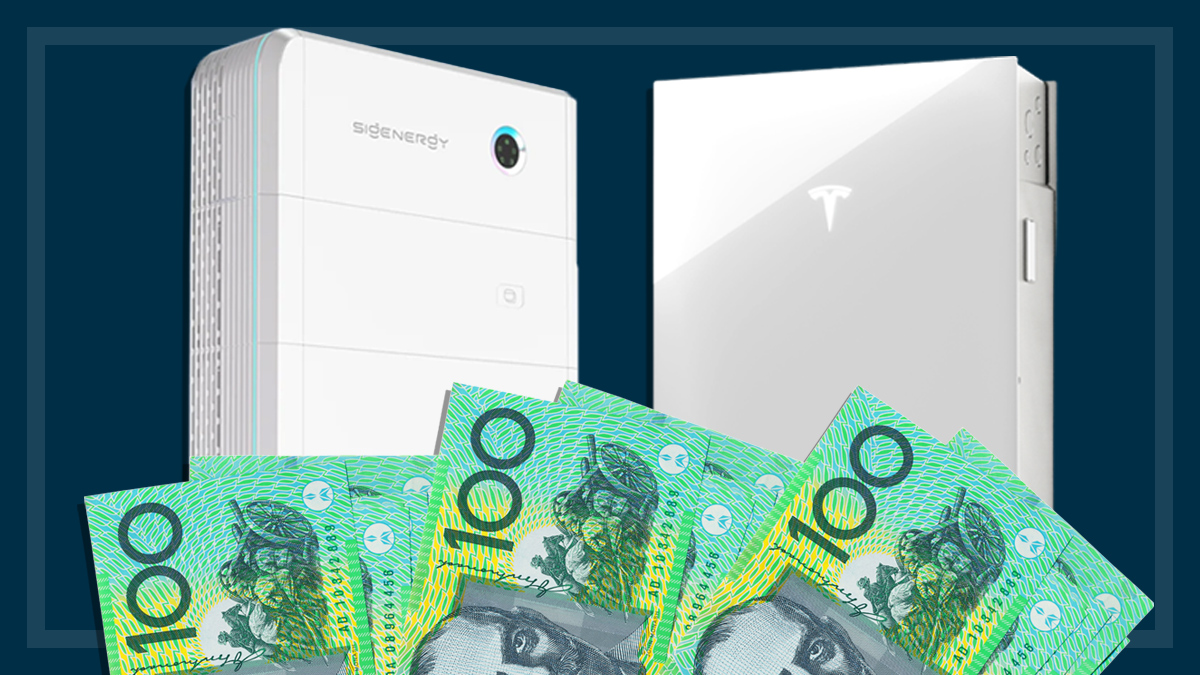
Home battery prices have been falling fast enough that headlines calling them a 'gamechanger' are no longer pure hype — in Australia, a federal rebate slashed installed costs by around 25%, and 250,000 units were installed in under a year [2]. But the economics of a home battery depend almost entirely on your grid context: what your utility charges, whether time-of-use tariffs exist, and how often the lights actually go out [1]. For Malaysian homeowners, that context looks very different from Australia or the UK — and the honest answer is that the ROI case is far harder to make here, at least for now [6].
#1 Tesla Powerwall 3
7/10Not officially sold in Malaysia as of early 2025; deployed in Thailand by EVC.

Best for: Malaysian homeowners with rooftop solar who want backup power resilience and are willing to wait for official local distribution [6]
Pros
- +13.5 kWh usable storage per unit with the option to stack multiple units for larger homes [6]
- +Seamless solar integration lets homeowners store excess PV generation for evening use [6]
- +Time-of-use load shifting built in — stores cheap off-peak electricity and discharges during peak hours, which matters if your market moves to time-based pricing [6]
- +Remote monitoring and control via the Tesla app gives real-time energy visibility [6]
- +Compact design supports both indoor and outdoor installation [6]
Cons
- −Not officially available in Malaysia as of March 2025 — EVC is gauging local interest but no launch date exists [6]
- −No local official warranty or service network in Malaysia yet, which is a significant risk for a RM30,000+ investment [6]
- −Payback period for residential batteries is structurally difficult to achieve quickly — fixed installation costs weigh heavily on small home systems compared to commercial scale [3]
- −Time-of-use arbitrage value is near zero under Malaysia's current flat-rate TNB tariff structure [6]
#2 BYD Battery-Box Premium HVS
6/10Price varies by seller; no official MYR retail listing found in sources.
Best for: Homeowners with existing solar PV systems who want modular, scalable backup storage and have a trusted local installer to manage the setup [3]
Pros
- +Lithium iron phosphate (LFP) chemistry — the same cell type used in large-scale commercial storage systems — offers strong cycle life and thermal stability [3]
- +Modular design allows capacity to be scaled up by adding battery packs, reducing upfront commitment [3]
- +BYD is a major regional player with growing Southeast Asia presence, making local support more plausible than some Western brands [6]
Cons
- −No confirmed official Malaysian retail channel or installer network found in sources — buyers are navigating an unstructured market [6]
- −Residential payback periods remain structurally long: fixed costs like grid connection, installation, and cabling dilute the per-kWh economics compared to commercial deployments [3]
- −Without time-of-use tariffs in Malaysia, the arbitrage use case that justifies the hardware cost simply does not apply today [6]
#3 Enphase IQ Battery 5P
6/10Price varies by seller; no official MYR retail listing found in sources.
Best for: Existing Enphase solar system owners who want modular, fault-tolerant backup power and have a certified Enphase installer available locally [5]
Pros
- +Microinverter-based architecture means each battery module operates independently — a single fault does not take down the whole system [3]
- +LFP chemistry shared with commercial-grade systems offers long cycle life and reduced fire risk compared to older NMC cells [3]
- +Pairs natively with Enphase solar microinverter systems, which have some installer presence in Southeast Asia [5]
Cons
- −Smaller per-unit capacity means you need multiple units for meaningful whole-home backup, pushing total installed cost up significantly [3]
- −No confirmed official Malaysian distribution or warranty support found in sources [6]
- −Like all residential batteries, the ROI case collapses without time-of-use pricing — Malaysia's flat tariff gives you no arbitrage window to exploit [1][6]
Quick reference
| # | Product | Price | Verdict | Buy |
|---|---|---|---|---|
| 1 | Tesla Powerwall 3 | Not available (Malaysia) | Best brand recognition and app experience — but wait for official local launch | ShopeeLazada |
| 2 | BYD Battery-Box Premium HVS | Price varies by seller | Best modular scalability for solar homes — source a certified installer carefully | ShopeeLazada |
| 3 | Enphase IQ Battery 5P | Price varies by seller | Best fault tolerance — only makes sense if you already run Enphase solar | ShopeeLazada |
Here is the honest summary for Malaysian readers: a home battery has three distinct value propositions — tariff arbitrage, solar self-consumption, and backup power — and right now in Malaysia, only the third one has a clean financial argument [6]. TNB's flat-rate tariff structure means there is no cheap off-peak rate to store and no expensive peak rate to avoid, so the arbitrage math that drives payback periods in Australia or the UK simply does not apply here [1][2]. If you have rooftop solar and genuinely need blackout resilience — think home office, medical equipment, or a property with unreliable grid supply — a battery can justify itself as insurance rather than an investment; otherwise, wait until time-of-use pricing arrives or installed costs fall further before committing [3][6].
Sources
- [1]Smart home energy management for sustainable socioeconomic development in Egyptian households — Nature
- [2]Solar home battery rebate: The big changes coming 1 May — CHOICE
- [3]Payback in 4 years? Tesvolt's new commercial battery aims to achieve what residential users can only dream of — Notebookcheck
- [4]Solar panel grants and funding in the UK 2026 | FMB — FMB, Federation of Master Builders
- [5]Springview Selects Singapore Landed Home For Residential Solar Pilot Project — SolarQuarter
- [6]EVC Tesla Powerwall Deployed In Thailand - Malaysia Next? — Carz Automedia Malaysia
Comments
No comments yet — be the first to weigh in.