The VPN Crackdown Hiding in Plain Sight: Age Verification Laws Are Building the Infrastructure for Internet Control
From Wisconsin to the UK to Russia, the same playbook is reshaping who controls your online access.
It Started With Porn Sites. It Won't End There.
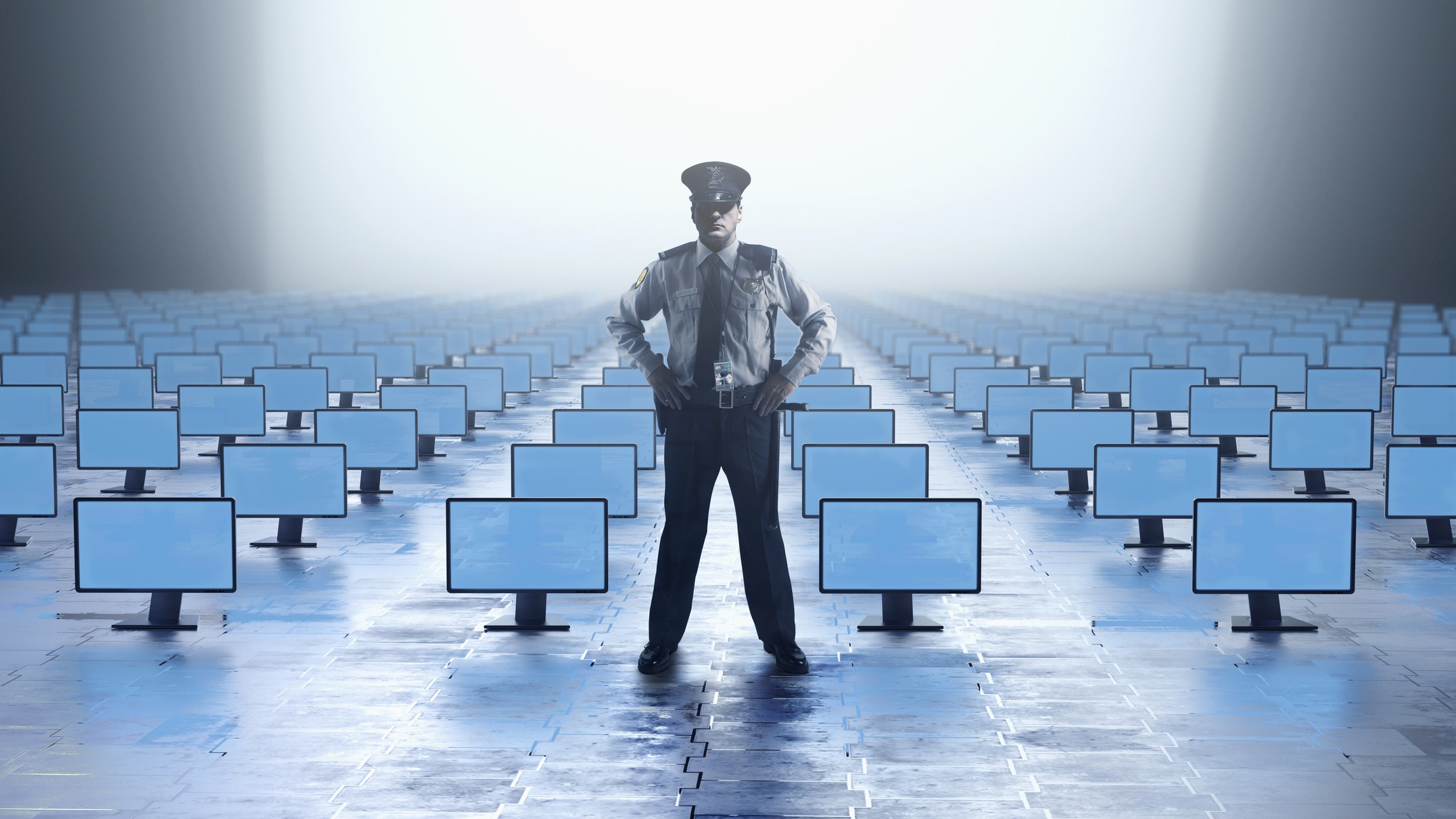
Here's a question worth sitting with: when the UK's Online Safety Act kicked in on July 25, 2025, what was the first thing hundreds of thousands of British users did? They downloaded a VPN. Proton VPN recorded a surge of more than 1,400% in UK signups within hours of the law taking effect. That's not a reaction to pornography being blocked — that's a reaction to something feeling fundamentally wrong about how the internet just changed. And they were right to sense it. Think of the Online Safety Act like a toll plaza being built on a highway that was previously free. The stated reason is to stop underage drivers from accessing certain roads. But once the toll infrastructure is in place — the cameras, the ID scanners, the monitoring equipment — it can check anyone for anything, at any time. The law's reach immediately extended beyond adult content: subreddits covering war crimes in Ukraine and Gaza, r/periods, r/stopsmoking, r/sexualassault — all gated or blocked. Young people in the UK were left unable to access information about sexual assault or abuse under laws ostensibly designed to protect them. This is the pattern. Child safety is the politically unchallengeable justification. The infrastructure it builds is the real story.
The Authoritarian Playbook — And Why Democracies Are Copying It
Russia didn't build its internet control system overnight. It built it incrementally, justified at each step by something reasonable-sounding. Block extremist content. Protect national security. Require data localisation. Each step created infrastructure that could be repurposed. By 2025, according to Human Rights Watch, thousands of websites were blocked in Russia. Instagram and Facebook were declared 'extremist.' YouTube and X were throttled to the point of being nearly unusable. Russia blocked access to Cloudflare, cutting off vast swathes of the internet in one move. The state communications watchdog Roskomnadzor pressured Apple, Google, and Mozilla to remove VPN apps from their stores. A 2025 law introduced fines for Russians who deliberately searched for 'extremist' content — with no publicly searchable list of what counts as extremist. The result: about 41% of Russian internet users were relying on VPNs by 2025, one of the highest adoption rates in the world, according to CEPA. But approximately half the population doesn't know how to use a VPN at all — meaning roughly half of Russians have no access to independent media, opposition politicians' websites, or foreign social media platforms. The critical observation from CEPA's analysis: it's not just authoritarian states running this playbook. When the UK began enforcing its Online Safety Act, Proton VPN downloads surged by 1,800%. The infrastructure being built in London to enforce age verification is technically indistinguishable from the infrastructure Moscow uses to enforce political censorship. The difference, for now, is intent. Intent changes with governments.

Who Actually Benefits When VPNs Are Weakened
When a VPN is blocked or throttled, three parties gain something — and none of them are the user. ISPs gain visibility. A VPN encrypts your traffic so your internet provider can't see what you're doing — only that you're connected to a VPN server. Without that encryption layer, ISPs can see every site you visit, every service you use, and how long you spend there. That data has commercial value. As the ExpressVPN explainer on net neutrality notes, without protections, ISPs can create tiered access, throttle competitors' services, and charge for 'premium' access to specific platforms. Governments gain reach. The Russian model demonstrates the end state: once you have the technical infrastructure to block VPN protocols, you can block anything routed through them — including encrypted journalism, opposition communications, and human rights documentation. Human Rights Watch documented how Russian authorities increasingly use internet shutdowns around protests, elections, and politically sensitive events like the funeral of Alexei Navalny. Advertisers and data brokers gain targeting capability. VPNs mask IP addresses, making it significantly harder to build accurate location and behavioural profiles. A user who can't route around ISP monitoring becomes fully visible to the data economy. The EFF's framing is direct: lawmakers in Wisconsin and Michigan 'have no idea what they're doing' in terms of technical implementation — but the effect of their proposals is to hand ISPs legally mandated surveillance capability under the banner of child protection.
Sources
- [1]2025 was the worst year on record for internet shutdowns as censors move to more targeted blocks — TechRadar
- [2]VPN Demand Statistics: VPN Demand Surges Around the World — Top10VPN
- [3]Blocked and Bypassed: Russians Evade Internet Censorship — Center for European Policy Analysis (CEPA)
- [4]Lawmakers Want to Ban VPNs—And They Have No Idea What They're Doing — Electronic Frontier Foundation
- [5]Government Set to Restrict UK Children’s Use of Internet VPNs and Social Media UPDATE — ISPreview UK
- [6]Disrupted, Throttled, and Blocked: State Censorship, Control, and Increasing Isolation of Internet Users in Russia | HRW — Human Rights Watch
- [7]Attacks on VPNs are unjustified and dangerous – and it's not how we achieve online safety — Tom's Guide
- [8]The UK's censorship catastrophe is just the beginning — User Mag | Taylor Lorenz
- [9]France: Freedom on the Net 2024 Country Report — Freedom House
- [10]UK online safety law sparks massive VPN surge — PPC Land
- [11]Europe VPN Market Size, Share, 2034 — Market Data Forecast
- [12]US Crypto Trading 2026: VPN Guide & Bitget Exchange Review — Bitget
- [13]Telecoms, Media & Internet Laws and Regulations Report 2026 Italy — ICLG.com
- [14]Lawmakers Want to Ban VPNs—And They Have No Idea What They're Doing — Electronic Frontier Foundation
- [15]Government Set to Restrict UK Children’s Use of Internet VPNs and Social Media UPDATE — ISPreview UK
- [16]House of Lords Votes to Ban UK Children from Using Internet VPNs — ISPreview UK
- [17]Disrupted, Throttled, and Blocked: State Censorship, Control, and Increasing Isolation of Internet Users in Russia | HRW — Human Rights Watch
- [18]Which Countries Use VPNs the Most? (2025 Report) — Cybernews
- [19]How Russia’s New Internet Restrictions Work and How to Get Around Them — The Moscow Times
- [20]Net neutrality: Everything you need to know — ExpressVPN
Comments
No comments yet — be the first to weigh in.