Hardware Attestation Is Becoming the New Walled Garden — and You're Already Inside One
The mechanism that stops malware is quietly becoming the mechanism that stops you.

The Checkpoint You Never Agreed To
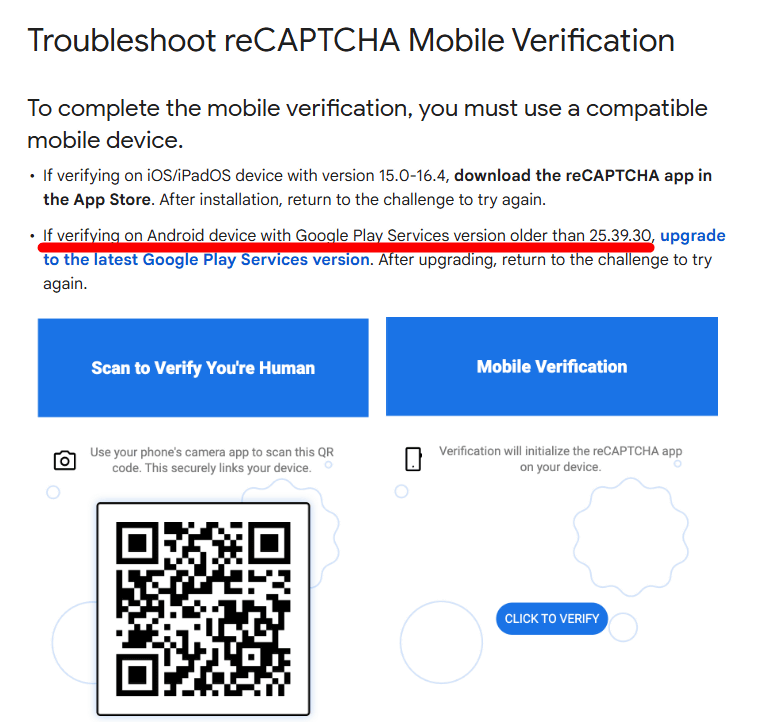
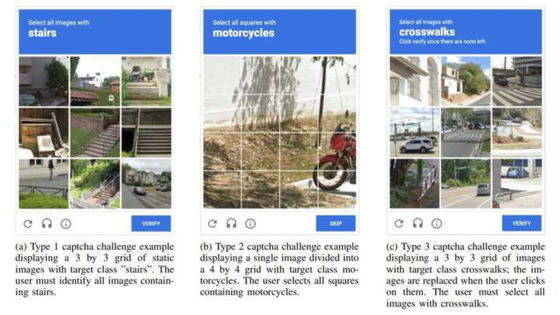
You're trying to log into a website on your phone. You're human. You know you're human. But the website isn't sure — so it fires up a CAPTCHA. Fair enough. Except now, the CAPTCHA itself won't load. Not because your internet is down. Not because you're a bot. But because your phone is running Android without Google's services installed, and the new reCAPTCHA has decided that a phone without Google Play Services is a phone it won't talk to. This is the situation that broke into the open in 2026. Google's next-generation reCAPTCHA — redesigned to defeat AI-based bypasses that had cracked the old puzzle system by September 2024 — now requires Google Play Developer Services to be installed on Android devices. The new verification method also replaces image puzzles with QR code scanning. For the vast majority of Android users, nothing changes. But for anyone running a de-Googled Android build — a version of Android deliberately stripped of Google's ecosystem — the CAPTCHA that was supposed to prove you're human now treats you as if you don't exist.
What Hardware Attestation Actually Is (No Jargon, Promise)
Think of hardware attestation like a security guard at a members-only club who doesn't just check your face — they check a chip embedded in your ID card that can't be faked. Your device has a secure chip that can generate a cryptographic signature, a kind of unforgeable digital stamp. When a server asks 'are you a legitimate device?', the chip signs the answer. The server checks the signature. If it matches what's expected, you're in. If it doesn't — say, because you've modified your operating system — the signature looks wrong, and the door stays shut. Google's version of this is called the Play Integrity API. Apple has its equivalent, called App Attest API. GrapheneOS — one of the most prominent de-Googled Android projects — has noted that both Google and Apple are 'gradually expanding their use of hardware-based attestation' and 'convincing a growing number of services to adopt it.' Apple has even extended this mechanism to the web. The security logic is sound: a device that can prove its integrity is harder to compromise. The problem is what happens when 'proving integrity' becomes synonymous with 'running the platform owner's approved software stack.'
The Same Key That Locks Out Malware Also Locks Out You
Here's the tension that the reCAPTCHA incident makes visible. Hardware attestation was designed to answer a real security question: is this device running software that hasn't been tampered with? Rooted phones, custom ROMs, and de-Googled builds all fail that check — not because they're malicious, but because they've been modified. From the attestation system's point of view, a phone running GrapheneOS and a phone running malware look equally 'non-standard.' The result is that the same mechanism protecting banking apps from genuine fraud also blocks privacy-conscious users who simply don't want Google's services on their device. reCAPTCHA is a sharp example because it's infrastructure — it's embedded across huge swaths of the web. When reCAPTCHA stops working, it's not one app that breaks. It's the ability to interact with entire categories of websites. As Android Authority put it, the problem is specifically for users who 'like Android but don't like Google.' That's a narrower group than most, but the principle scales: every service that adopts Play Integrity or App Attest raises the cost of running a non-approved device by one more broken function.
Why reCAPTCHA Is the Canary, Not the Crisis
The reCAPTCHA change became visible because it broke something people use constantly and noticed immediately. But the deeper shift is structural. According to the Internet Archive, version 25.39.30 of Google Play Developer Services was listed as a requirement when Google's support page was published in October 2025 — meaning this wasn't a sudden decision, it was a quiet policy change that only surfaced when users started hitting walls. GrapheneOS, which has built a workaround by allowing reCAPTCHA to run inside a sandboxed Google Play environment, framed the broader issue directly: Google and Apple's expansion of hardware-based verification is leading to 'the elimination of competition.' That's a strong claim, but the mechanism supports it. If attestation becomes the default requirement for core web infrastructure — not just premium streaming or banking, but basic human-verification tools — then the cost of opting out of either major platform ecosystem stops being 'inconvenient' and becomes 'effectively unusable.' The walled garden doesn't need a visible fence when the ground itself only supports approved plants.

What to Watch Next
The reCAPTCHA shift is one data point in a longer trend. GrapheneOS has already flagged that Apple brought hardware-based attestation to the web — meaning this isn't purely an Android story. Watch for whether other high-traffic web services quietly adopt Play Integrity or App Attest as a backend requirement, the way reCAPTCHA did. Watch for whether de-Googled Android projects can sustain their sandboxed workarounds as attestation requirements tighten. And watch for how regulators respond to the argument that security infrastructure is being used as a competition lever — because that argument is now being made openly, not just in privacy forums, but by the developers building the alternative platforms themselves.

Sources
Comments
No comments yet — be the first to weigh in.