The Motherboard Market Is Collapsing — And AI Is the Reason Your Next PC Build Will Cost More
A 28% sales crash across the big four motherboard makers is a warning signal, not just a sales report.
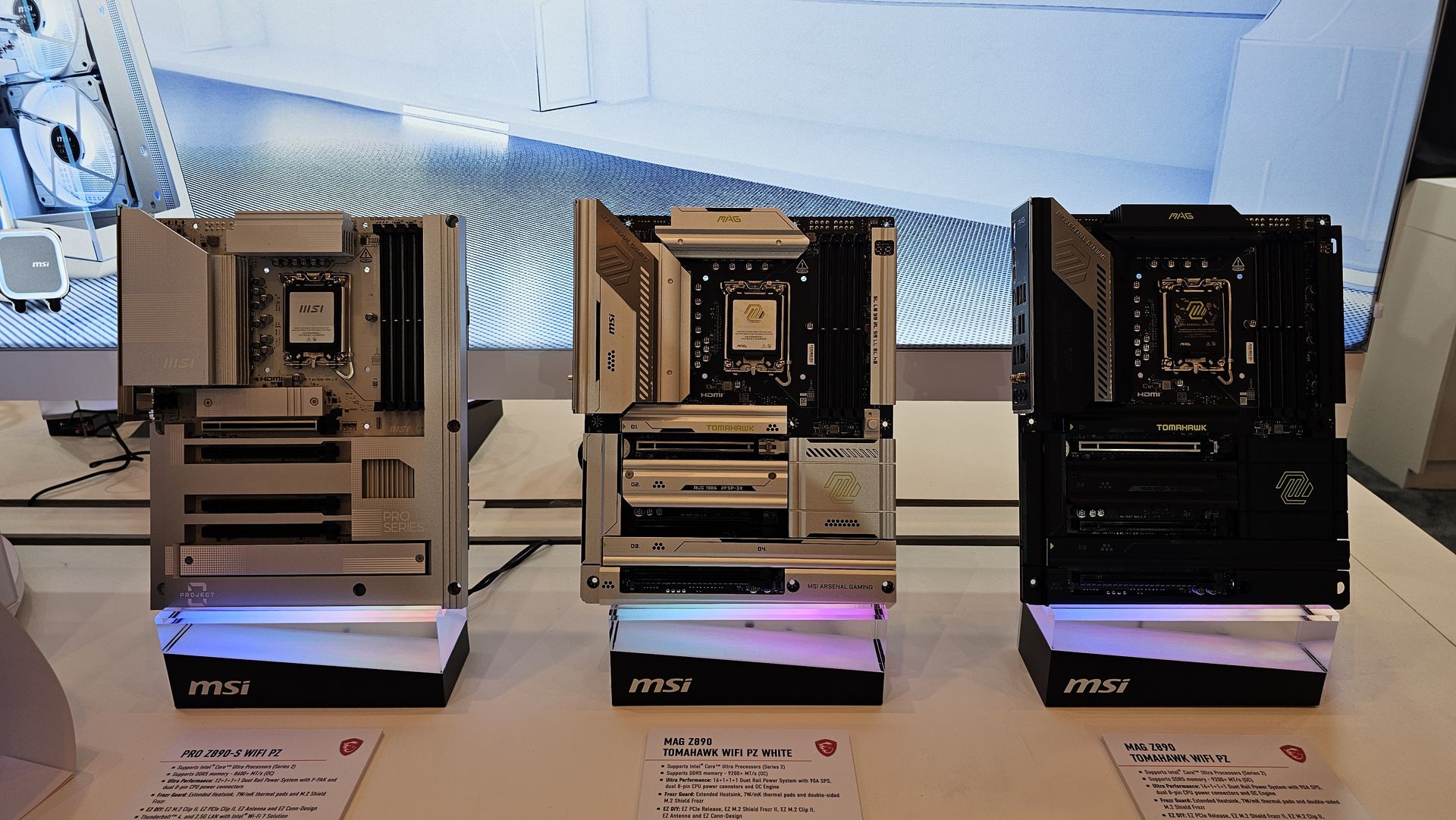
The Number That Should Alarm Every PC Builder
Picture this: you've been putting off a PC upgrade, waiting for prices to settle. You're not alone — and that collective hesitation is now showing up as a category-level collapse. Motherboard sales across the four major manufacturers — Asus, Gigabyte, MSI, and ASRock — are projected to fall 28% in 2026 compared to 2025, according to reporting from Digitimes via Tom's Hardware. Asus, the market leader, sold 15 million motherboards in 2025. By mid-2026, shipments for the entire year are tracking toward fewer than 10 million — a 33% drop. ASRock is hit hardest: projections show a 37% decline, from 4.3 million units down to just 2.7 million. Gigabyte is looking at a 22% fall, MSI a 24% fall. Digitimes described the situation as 'worse than past financial crises or the first year of the COVID-19 pandemic.' That framing matters. This isn't a bad quarter. It's a structural signal — and the mechanism behind it is the genuinely interesting part.
Why This Is Different: It's Not a Demand Problem, It's a Supply Reallocation
Think of the global memory supply like a fixed-size water tank. For decades, most of that water flowed to consumer devices — PCs, laptops, smartphones. Then AI data centers showed up with industrial-scale pumps and long-term contracts, and the flow changed direction. Samsung, SK Hynix, and Micron — three companies that control over 95% of global DRAM production — have systematically shifted manufacturing capacity toward High-Bandwidth Memory (HBM), the specialised chip that AI accelerators like Nvidia's GPUs require in enormous quantities. SK Hynix disclosed it had secured demand for its entire 2026 HBM production capacity. Micron's business chief Sumit Sadana told CNBC: 'We have seen a very sharp, significant surge in demand for memory, and it has far outpaced our ability to supply that memory and, in our estimation, the supply capability of the whole memory industry.' The result: consumer-grade DRAM prices roughly doubled since early 2025, with TrendForce projecting a further 50–55% rise in Q1 2026 alone. That's the kind of increase that makes a motherboard purchase feel like a luxury, not a hobby. IDC now calls this 'a potentially permanent, strategic reallocation of the world's silicon wafer capacity' — not a cyclical blip.
The Hidden Cost: Shrinkflation You Can't See in the Spec Sheet
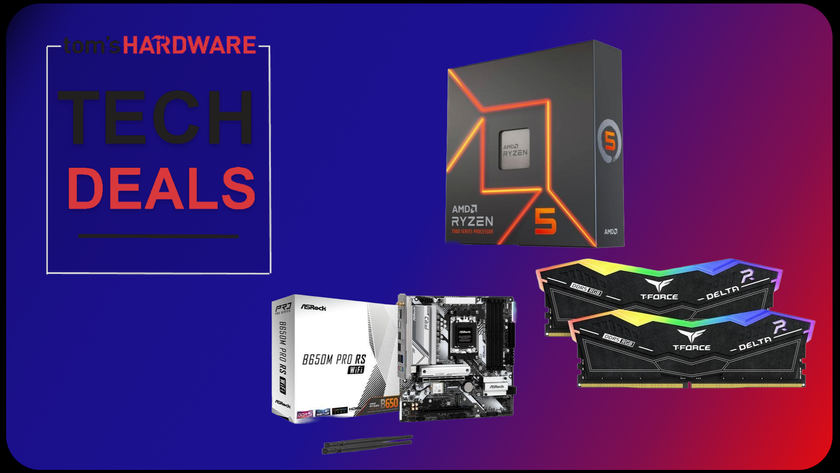
Here's the part that doesn't make headlines: when component costs spike and consumer demand softens, manufacturers don't just raise prices — they quietly reduce what you get. Igor's Lab put it plainly: 'the dumb end user is no longer the central figure in the hardware market of 2026. He may still be the one paying, but he is no longer the primary focus of manufacturing, priorities, and product strategy.' The industry will describe this as 'tight supply chains' or 'dynamic price trends,' but the practical reality for builders is that products are technically available while being consumer products in name only — priced and allocated as if they were enterprise hardware. Omdia's analysis adds another layer: PCs priced below US$500 are expected to decline by 28% in 2026, while high-end PCs priced at US$900 and above may maintain modest growth. Vendors are prioritising premium SKUs because there's more margin room to absorb rising memory costs. The budget and mid-range segments — where most enthusiast builders actually shop — are being squeezed hardest. Gartner has projected a potential 130% combined increase in DRAM and SSD prices by end of 2026.
The Scale of What AI Actually Consumes
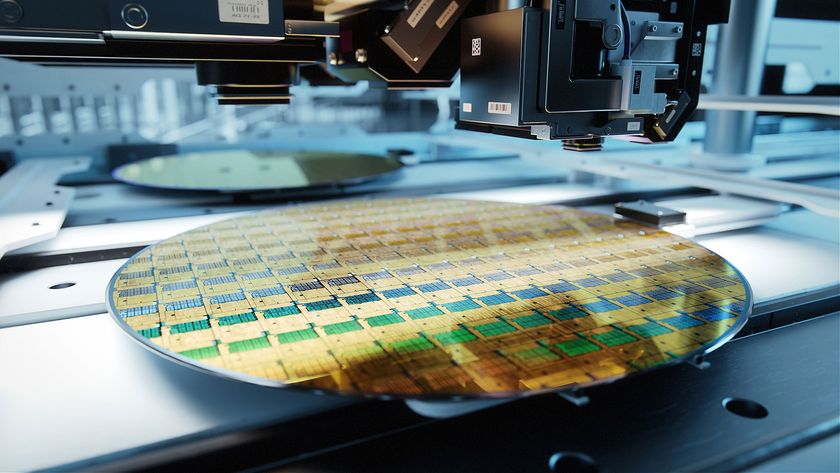
To understand why consumer hardware is losing the bidding war, you need to see the numbers on the other side. A single Nvidia B300 GPU requires eight HBM chips, each containing 12 individual DRAM dies — 96 DRAM dies per GPU. A fully configured DGX B300 system with eight GPUs requires 768 DRAM dies just for the HBM modules. Nvidia's NVL72 rack contains 13.4 terabytes of RAM — equivalent to the memory found in roughly 1,000 high-end smartphones. When you multiply that across hundreds of thousands of GPUs being deployed in data centres worldwide, the scale of memory consumption becomes clear. Hyperscale cloud providers including Meta, Google, Microsoft, and Amazon have been signing long-term supply agreements with memory manufacturers, effectively locking up production capacity for years at premium prices. Consumer device makers — and by extension, the motherboard vendors who depend on affordable DRAM being available — are left competing for whatever remains. AMD has already flagged the downstream effect: the company expects a 20% decline in gaming revenue from 'higher component costs' in the second half of 2026.
Cyclical Trough or Permanent Shift? What to Watch Next
The honest answer is: both forces are operating simultaneously, and the timeline matters more than the label. IDC expects memory supply challenges to persist throughout 2026 and 'likely well into 2027,' with a PC market rebound now pushed out to 2028. Samsung and SK Hynix have both warned that AI-driven memory shortages could last until 2027 and beyond. The structural dynamic — chipmakers rationally prioritising HBM over consumer DRAM because the revenue per wafer is vastly higher — does not reverse until either AI capex cools or new fab capacity comes online at scale. On the capex question: SK Hynix customers have reportedly offered to buy its EUV machines and fund new fab lines as memory capacity hits zero, which signals just how tight the supply ceiling actually is. For PC builders, the practical read is this: 2026 and 2027 are the trough years. The components you need are available but expensive, and the budget-to-mid-range segment is being actively deprioritised by manufacturers. The enthusiast PC is not dead — but it is, for now, being treated as a secondary market by the very chipmakers it depends on. The watch signal is simple: when HBM allocation starts to plateau and Samsung or Micron announce meaningful capacity expansion for consumer DRAM, the cycle turns. Until then, the upgrade calculus has genuinely changed.
Sources
- [1]PC motherboard sales are expected to fall by more than 25% year-on-year, as consumers are postponing upgrades due to soaring prices for memory, storage, and processors driven by AI. — GIGAZINE
- [2]Motherboard sales 'collapse' by more than 25% as chipmakers strangle enthusiast PC market to build more AI chips — Asus projected to sell 5 million fewer boards in 2025, Gigabyte, MSI, and ASRock also expected to see reduced sales numbers — Tom's Hardware
- [3]Higher ASPs, lower unit volumes: How the memory crisis is reshaping the PC and smartphone outlook — International Data Corporation
- [4]The end user pays, the data center reaps the rewards: how the 2026 AI storage crisis will disrupt the hardware market for ordinary consumers — igor´sLAB
- [5]Memory Chip Shortage 2026: HBM Takes 23% of DRAM Wafers — tech-insider.org
- [6]Global PC Shipments to Decline 12% in 2026 Amid Severe Memory and Storage Supply Challenges — TechPowerUp
- [7]ASML Stock Surges Almost 3% As Growth Remains Steady in Q3 — TIKR.com
- [8]Global Memory Shortage Crisis: Market Analysis and the Potential Impact on the Smartphone and PC Markets in 2026 — International Data Corporation
- [9]AI Is Insatiable — IEEE Spectrum
- [10]Memory Chip Shortage 2026: HBM Takes 23% of DRAM Wafers — tech-insider.org
- [11]AI memory is sold out, causing an unprecedented surge in prices — CNBC
Comments
No comments yet — be the first to weigh in.