Malaysia's EV Policy Keeps Changing — and the Industry Is Paying the Price
MITI's latest CBU EV reversal isn't just about protecting Proton — it's a masterclass in how regulatory flip-flops destroy investor confidence.
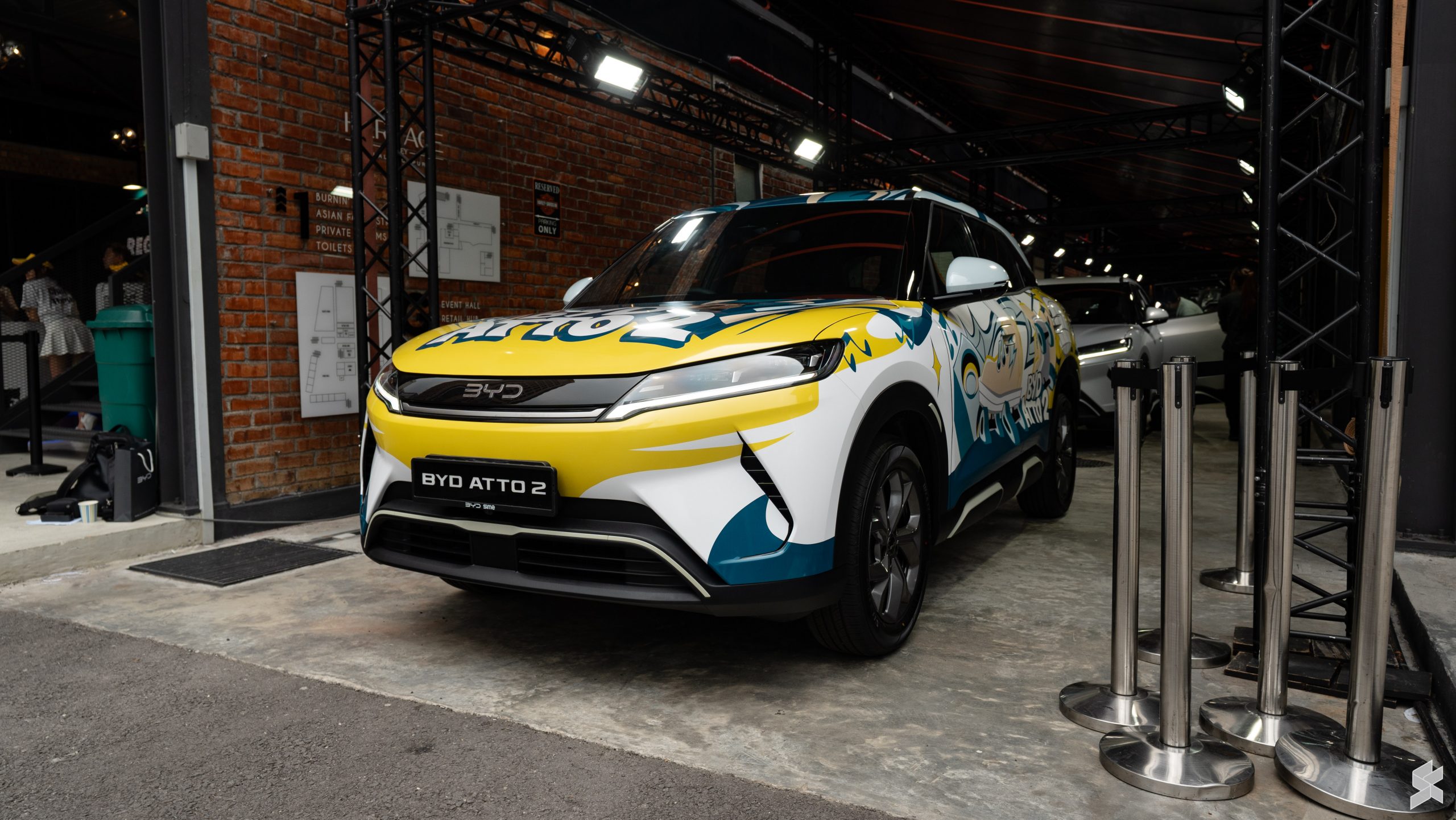
What Just Changed — And Why the Timing Stings
Think about how frustrating it would be if Touch 'n Go kept changing the reload rules every six months — just as you'd finally figured out the system. That's roughly what foreign EV brands have been living through in Malaysia. Here's the sequence: Malaysia ran a four-year tax exemption for fully-imported (CBU) EVs under the Franchise Approved Permit (AP) scheme. That window closed on December 31, 2025. Fair enough — the industry knew it was coming, and many brands had already committed to local assembly (CKD) operations here. What the industry did not fully anticipate was what came next. On May 6, 2026, MITI confirmed that starting July 1, 2026, all CBU EV imports must meet two hard conditions: a minimum declared CIF (cost, insurance and freight) value of RM200,000, and a minimum power output of 180 kW — equivalent to 245 PS or 241 hp. MITI communicated this to AP franchise holders through an engagement session held on April 30, 2026 — barely two months before the rules kick in. For brands with existing stock, MITI offered a limited grace period to sell remaining inventory, including units already at port or in transit.

The Numbers That Tell the Real Story
The RM200,000 minimum CIF value and 245 PS power floor aren't arbitrary — they effectively redraw the entire accessible CBU EV market. For context, an alleged MITI policy document that circulated on LinkedIn as far back as December 2025 had pointed to a RM250,000 minimum price threshold and a 272 hp (200 kW) power floor for new CBU EV entrants. The confirmed July 2026 rules land at slightly different numbers — RM200,000 CIF and 180 kW — but the directional intent is identical: price out the mid-range, volume-play EVs that Chinese brands have been using to crack new markets. 📦 **Jargon-Free Explainer** - **CBU (Completely Built-Up):** A fully assembled car imported from overseas. No local manufacturing involved. - **CKD (Completely Knocked Down):** Car parts imported and assembled locally — what brands like BYD, Volvo, and Chery are now doing in Malaysia. - **CIF value:** The declared cost of the car plus insurance and freight to get it here. This is the figure MITI is now using as the RM200,000 floor. - **Franchise AP:** A government permit that allows a company to import and sell a specific foreign car brand in Malaysia.

The Proton Tension Nobody Wants to Say Out Loud
Every Malaysian auto policy conversation eventually arrives at the same address: Proton and Perodua. MITI's own data confirms why — the two national marques dominated the domestic market at around 61% for the period 2020 to 2025. The new CBU rules land hardest on brands that haven't yet committed to local assembly — precisely the newer Chinese EV entrants eyeing Malaysia as a regional foothold. Meanwhile, brands that have already set up CKD operations (BYD in Tanjung Malim, Chery at Inokom, Volvo, Mercedes-Benz, MG Motor via EP Manufacturing) are largely insulated. Chery's trajectory shows what's at stake: the brand entered Malaysia in 2023 and grew from 4,649 units that year to 33,136 units in 2025. Its average selling price per unit also climbed from RM116,000 to RM127,000 over the same period. That kind of growth curve is exactly what a high minimum-price CBU rule is designed to slow down for new entrants who haven't yet localised. The uncomfortable truth is that a policy framed as industrial development ends up functioning as a market access filter — one that benefits whoever already has a CKD footprint, including the national car ecosystem.
What This Signals to Foreign Investors Watching the SEA EV Race
The specific reversals that alarm the industry aren't just about the numbers — they're about the pattern. A four-year exemption window was the original signal that Malaysia was open for EV business. Brands planned their market entry timelines, their AP applications, their pricing strategies, around that framework. Then the goalposts moved: first an alleged December 2025 document suggesting RM250,000 and 272 hp thresholds, then a confirmed May 2026 announcement with different figures (RM200,000 CIF, 245 PS), effective July 1 — communicated to industry just two months before implementation. For a brand evaluating Malaysia as a regional hub, this is a serious red flag. Investment decisions in automotive — factory commitments, supply chain contracts, staffing — run on 3-to-5-year horizons. A policy environment that shifts within months, with limited lead time, makes those calculations nearly impossible to lock in. MITI's own data noted that Japanese brands began losing market share from 2023 onward partly because they lacked EV models — the very segment where policy uncertainty now looms largest for the next wave of entrants.

What to Watch Next
Three things will tell us whether there's a coherent strategy underneath the flip-flops — or just reactive policymaking. **1. The CKD pipeline.** BYD's Tanjung Malim plant, XPeng and MG Motor's assembly operations via EP Manufacturing, and TQ Wuling's local facility are all in progress. If these come online on schedule and produce competitively priced EVs, the CBU restrictions become less consequential for consumers. If they stall, the RM200,000 floor effectively becomes a ceiling on EV variety. **2. New brand applications.** Watch whether brands like Nio — whose Firefly model has been generating attention — pursue Malaysian market entry under the new CBU rules, or quietly shelve their plans. A dry pipeline of new applicants would be the clearest signal that the policy is chilling entry. **3. MITI's next communication timeline.** The April 30 engagement session gave industry less than 60 days' notice before July 1 implementation. If future policy adjustments come with similarly compressed timelines, the uncertainty premium on Malaysia as an investment destination only grows.

Sources
Comments
No comments yet — be the first to weigh in.