Malaysia's 2030 Level 3 Autonomous Driving Target: What the Government Is Actually Promising — and How Far the Roads Have to Go
Everyone's reporting the target date. Almost nobody is explaining what Level 3 actually demands.
The Number Everyone's Quoting — and Why It Needs Unpacking
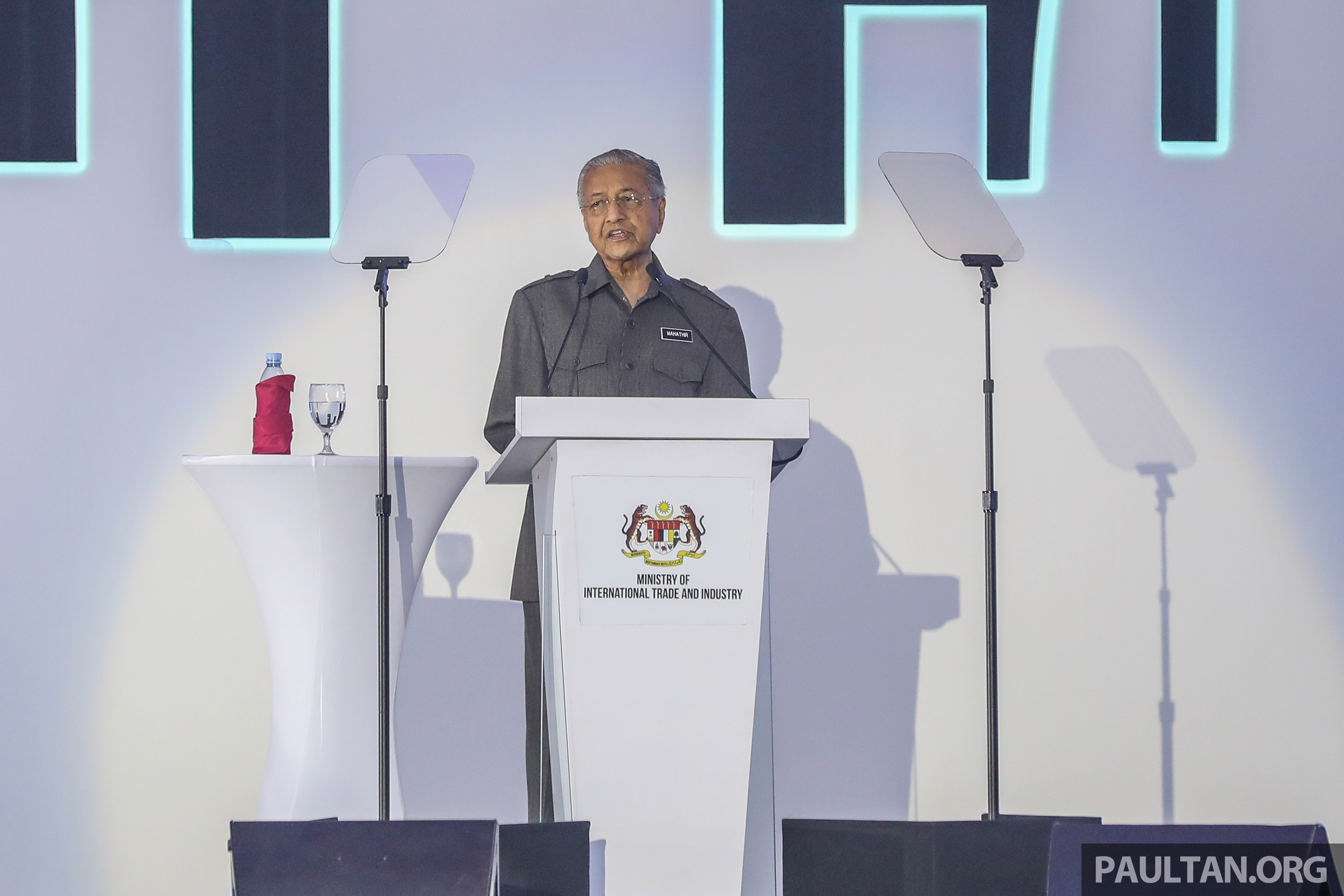
When a government minister announces a 2030 target for Level 3 autonomous vehicles, the headline almost writes itself. But here's the thing: 'Level 3' is probably the most misunderstood phrase in all of automotive technology. It sounds like the car is nearly driving itself. In practice, it's the level that creates the most complicated — and legally unresolved — situation of all the autonomy levels. Think of it like a GrabCar ride where the driver is allowed to watch a video on their phone, but must be ready to grab the wheel the instant the app pings them. That's not relaxing. That's a different kind of stress entirely. Malaysia's National Automotive Policy 2020 (NAP 2020), launched by then-prime minister Tun Dr Mahathir Mohamad, already set the directional ambition: developing Automated, Autonomous, Connected Vehicles (AACV) as part of its Next Generation Vehicles (NxGV) thrust through to 2030. The 2030 Level 3 target from MITI is the latest waypoint on that same road. But before we debate whether the timeline is achievable, we need to understand what Level 3 is actually asking for.
SAE Levels 0–5: A Jargon-Free Explainer (With the Level 3 Catch Nobody Mentions)
**[ WHAT THE LEVELS ACTUALLY MEAN ]** The SAE International scale runs from Level 0 to Level 5. Here's what each one means in plain language: - **Level 0:** The car does nothing. You drive. Every action is yours. - **Level 1:** One assist feature is active — cruise control, or lane-keeping, but not both together. - **Level 2:** The car handles both steering and acceleration/braking simultaneously in certain conditions. But you, the driver, must watch the road at all times and be ready to take over instantly. Tesla's Autopilot and similar systems sit here. Liability stays with you. - **Level 3 — the awkward one:** The car takes full control of driving tasks under defined conditions (think: clear weather, a designated highway stretch). You are legally allowed to look away from the road. But here's the catch — when the system decides it can no longer cope, it hands back control to you, and you must respond *immediately*. The system, not you, decides when the handoff happens. This creates what engineers call the 'handoff problem' and what lawyers call a liability nightmare. - **Level 4:** The car drives itself within a defined area with no human intervention needed at all. If it can't cope, it stops safely on its own. - **Level 5:** Full autonomy, anywhere, any conditions. No steering wheel needed. Level 3 sits in a uniquely uncomfortable middle ground. Below it, liability is always the driver's. Above it, liability shifts to the system and its maker. At Level 3, it depends on *when* the handoff happened and *how fast* you responded — a question no legal system in the world has cleanly resolved yet.

Where Level 3 Actually Stands Globally Right Now
Here's the global reality check that most coverage of Malaysia's 2030 target skips entirely. According to IDTechEx, Level 3 remains 'a rarity for private vehicles' globally, with most new cars sitting at Levels 1–2. The barriers to private autonomous driving 'remain high, and growth has been limited.' China made a notable move in December 2024, when two electric sedans — the Deepal SL03 and Arcfox Alpha S — received national-level approvals from China's Ministry of Industry and Information Technology to operate under Level 3 conditions on designated highway sections in Chongqing and Beijing. Critically, as China Daily reported, these are conditional commercial pilots, not open-road deployment — and 'hurdles over liability, infrastructure and commercial rollout remain to be resolved for widespread deployment.' Several Chinese automakers including BYD, Nio, FAW and SAIC have entered the Level 3 approval pipeline, with 2026 widely seen as a potential starting point for broader rollout if pilots proceed smoothly. McKinsey's 2026 survey of autonomous vehicle industry leaders found that adoption timelines have slipped by one to two years on average compared to their 2023 survey. Large-scale global rollout of Level 4 robo-taxis is now expected around 2030, not 2029, and Level 4 urban pilots for private passenger cars have been pushed from 2030 to 2032. The survey also notes that experts expect robo-taxis — not privately owned cars — to be the first commercial application of Level 4 in mobility. The picture that emerges: even countries with mature regulatory frameworks and purpose-built highway infrastructure are treating Level 3 as a carefully managed pilot programme, not a consumer product rollout.

What NAP 2020 Built — and What the Road to Level 3 Still Requires
Malaysia's automotive policy architecture isn't starting from zero. NAP 2020 explicitly incorporated AACV development alongside EV and smart mobility goals, and its framework covered 'safety, environment and consumerism' as one of three core strategies — acknowledging that standards and regulations are as important as the vehicles themselves. MITI minister Datuk Darell Leiking noted at the NAP 2020 launch that the policy would cover 'the comprehensive development of industry capacities, including the supply chain, human capital, indigenous technology, infrastructure, standards/regulations and other elements.' But Level 3 has specific infrastructure demands that go well beyond general automotive policy. The China Daily report on China's Level 3 pilots is instructive: even with national-level approvals, the vehicles are restricted to *designated highway sections* under *defined conditions*. That's not a limitation of the technology — it's a reflection of what Level 3 actually requires: consistent lane markings the sensors can read reliably, standardised signage the system can interpret, predictable traffic behaviour, and a regulatory framework that defines who is liable when the handoff goes wrong. The workforce dimension is equally real. MIDA has highlighted that the EV and advanced mobility transition demands TVET institutions 'equip the next generation of talent with the skills necessary to thrive in the green economy' — and operating, maintaining, and certifying Level 3 systems requires a very different technical skill set than servicing a conventional car. IDTechEx projects that even by 2036, approximately 70% of software-related revenue in the private vehicle market will still be ADAS-related (Levels 0–2), reflecting how slowly the higher levels are expected to penetrate the broader fleet.

What to Watch Next: The Signals That Will Tell You If 2030 Is Real
The 2030 Level 3 target is best understood not as a promise that Malaysians will be riding in self-driving cars by the end of this decade, but as a directional commitment to build the foundations — regulatory frameworks, testing corridors, talent pipelines, standards — that make controlled Level 3 deployment possible in specific contexts. China's approach is the clearest comparison available: years of regulatory tightening, a ban on misleading marketing of Level 2 systems as 'autonomous driving,' and then carefully bounded public pilots on named highway sections. The signals worth tracking as 2030 approaches: **Regulatory framework:** Does Malaysia establish a domestic AV testing and approval framework with defined conditions for Level 3 operation, similar to what China's MIIT issued for the Deepal and Arcfox approvals? NAP 2020's roadmaps pointed in this direction, but the specific regulatory instrument matters. **Designated corridors:** Level 3 globally is a highway-first story, not an urban one. Watch for announcements about specific highway corridors designated for AV testing or conditional deployment — that's the realistic 2030 outcome, not city-centre autonomy. **Talent and TVET alignment:** MIDA has flagged TVET institutions as critical to Malaysia's advanced mobility transition. Whether those programmes are producing graduates with AV-specific skills — sensor calibration, system certification, liability documentation — will be a leading indicator of whether the industry infrastructure matches the policy ambition. **McKinsey's global timeline context:** With industry experts now placing large-scale Level 4 robo-taxi rollout at 2030 globally, and Level 4 private car pilots at 2032, a Malaysian Level 3 target for controlled corridors by 2030 sits within — not ahead of — the global adoption curve. That's actually the point: the target is achievable if the work is the right work.

Sources
- [1]Powering the Future of Electric Mobility: Advancing Innovation through TVET Excellence — MIDA | Malaysian Investment Development Authority
- [2]NAP 2020 launched - an enhancement of NAP 2014, aims to make Malaysia regional automotive leader — Paul Tan's Automotive News
- [3]Malaysia's EV roadmap - 10,000 CBU full electric cars tax free, 7,000 AC/500 DC charging points in LCMB — Paul Tan's Automotive News
- [4]NAP 2020 – policy framework and all related points — Paul Tan's Automotive News
- [5]China pilots L3 vehicles on roads — China Daily
- [6]Where to next? Insights from autonomous-vehicle experts — McKinsey & Company
- [7]The Case for Autonomous Private Vehicles and the Software Market — IDTechEx
Comments
No comments yet — be the first to weigh in.