Glowing Algae as a Light Source: Genuinely Interesting Biology, Genuinely Far From Your Desk Lamp
The bioluminescent algae story is real science — here's what it actually shows, and what it doesn't.
Why This Story Keeps Getting Mangled
Every few months, a headline appears promising that glowing algae will replace your light bulb. The story spreads, gets shared in WhatsApp groups, and then quietly disappears — because nobody follows up with the honest version. This time, researchers at the University of Colorado Boulder published real, peer-reviewed work in Science Advances that is genuinely worth understanding. But understanding it properly means separating what was actually achieved from what the clickbait version implies. Think of it like the early days of e-wallet adoption here: GrabPay and Touch 'n Go were real technology doing real things in controlled environments long before they became the everyday tap-and-go infrastructure we now take for granted. The gap between 'it works in a lab' and 'it works in your pocket' took years to close — and for bioluminescent lighting, that gap is far wider. The research deserves honest coverage, not hype and not dismissal.

What Dinoflagellates Actually Do — and Why It's Remarkable
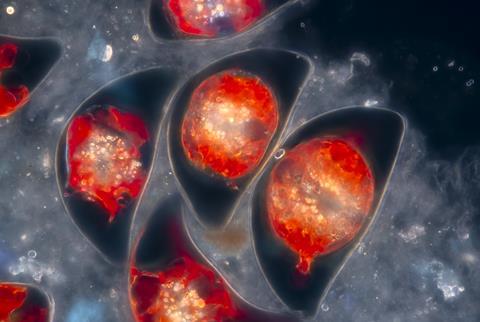
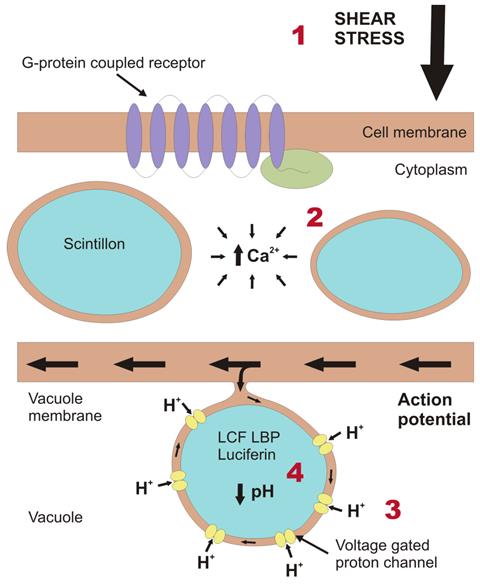
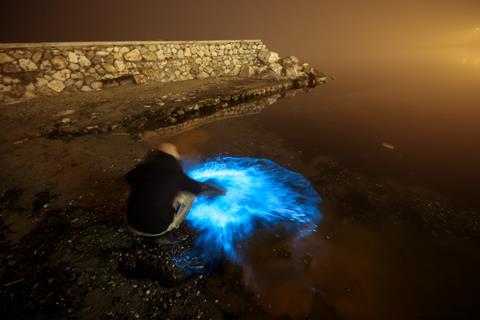
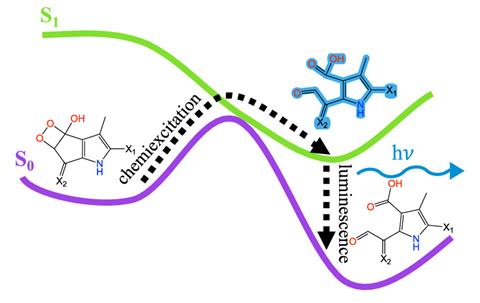
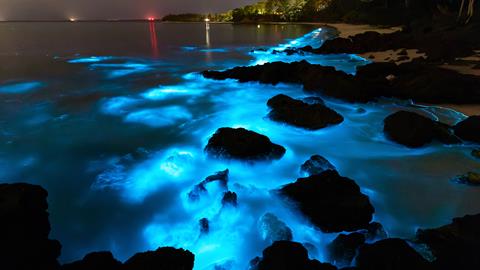
The organism at the centre of this research is *Pyrocystis lunula*, a single-celled marine alga. In the ocean, it produces brief flashes of icy blue light when physically disturbed — by crashing waves or a passing boat hull, for instance. Those flashes last only milliseconds. The light comes from a chemical reaction inside specialised organelles called scintillons, where pH changes cause a molecule called luciferin to react with an enzyme called luciferase, releasing light. In the deep ocean, as much as 90 percent of all living creatures may possess some bioluminescent ability. The phenomenon is genuinely widespread in nature — fireflies, anglerfish, certain mushrooms — but dinoflagellate bioluminescence remains one of the least chemically understood systems among them. Researchers are still debating the exact reaction mechanism and the true structure of the light-emitting product. That uncertainty matters: you cannot engineer something you do not fully understand, which is part of why practical applications remain distant.
What the CU Boulder Team Actually Achieved
The key breakthrough was sustaining the glow — not just triggering it. The team discovered that shifting the pH of the algae's environment using an acidic solution with a pH of 4, similar to tomato juice, triggered a sustained glow lasting up to 25 minutes. A basic solution at pH 10, comparable to mild hand soap, also triggered light but produced a shorter, more diffused result. 'It was a very exciting moment when we found the right chemical stimulant that allowed the light to stay on for a long time,' said Giulia Brachi, the study's first author. 'This is the first time we have figured out how to sustain luminescence.' The team then embedded the algae into a biocompatible hydrogel and used 3D printing to create glowing shapes — including crescent moons — that emitted a strong cyan light. The algae survived the printing process and remained healthy for several weeks. After four weeks, acid-treated samples retained 75 percent of their initial brightness. These are real, reproducible results. The novelty is real. The scale is not.
The Gap Between 'Glowing in a Lab' and 'Replacing a Light Bulb'
Here is where honest science coverage earns its keep. A 25-minute sustained glow from a small 3D-printed hydrogel structure is not the same thing as the consistent, controllable, high-intensity illumination you need to read by, cook by, or run a factory. The energy density of bioluminescent light is orders of magnitude below what an LED produces. You cannot dim or brighten it with a switch the way you adjust your Philips Hue bulb. The chemical trigger — an acid or base solution — needs to be reapplied to restart the glow, which raises immediate questions about how you would design a practical, repeatable system around that. The lifespan of living organisms in engineered environments introduces biological variability that electronics do not have. Professor Wil Srubar, who led the research, framed it correctly himself: 'This project was a moonshot idea.' He is not claiming a product. He is claiming a proof-of-concept that opens a research direction. That framing is important.
Where Bioluminescent Tech Is Realistically Headed First
The researchers themselves point to applications that do not require bioluminescence to compete with electrical lighting on brightness or duration. The most credible near-term uses are ambient indicators and biosensors. Because *P. lunula* responds to chemical changes in its environment, it could theoretically be embedded in a sensor that glows when it detects toxins or pollutants in water — a living early-warning system for water quality monitoring. The team also noted potential in replacing toxic chemical glow sticks used in entertainment settings. Professor Chris Howe of the University of Cambridge, who was not involved in the research, described the work as 'a significant first step toward sustainable lighting' — careful, qualified language that matches the actual state of the science. The algae are carbon-negative: they subsist on seawater, sunlight, and CO2, and they absorb carbon while producing light. That is a genuinely interesting property for long-term sustainability applications, but it does not accelerate the timeline to a commercial product.
What to Watch Next
The honest forward-looking question is not 'when will algae replace my ceiling light' — it is 'what does this research unlock for biosensor design and living materials science?' Watch for follow-up work on whether *P. lunula* responds to specific chemical contaminants, which would be the foundation of a practical water-quality sensor. Watch for research into whether the pH-triggering mechanism can be made repeatable and controllable at scale, since a glow you can only switch on once per chemical application has limited utility. And watch for whether the 3D-printed hydrogel platform gets applied to other bioluminescent organisms, which is exactly what Srubar suggested: 'This discovery really paves the way for engineering other living light materials and devices.' The science is moving. The desk lamp replacement is not coming soon. Both things are true, and the second one does not make the first one less interesting.
Sources
- [1]CU Boulder researchers develop 3D-printed living lights from algae — interestingengineering.com
- [2]Newsid=69344 — nanowerk.com
- [3]4022961.article — chemistryworld.com
- [4]US Scientists Develop Bioluminescent Structures Using Sea Algae — asatunews.co.id
- [5]20220407 THE Living Lights That Could Reduce Energy USE — bbc.com
- [6]Bionic plants and electric algae may usher in a greener future — snexplores.org
- [7]Glowing algae could power the lamps of the future — tech.yahoo.com
- [8]Juhu Beach Waves Blue Night Viral Sight Mumbai Science 10523827 — indianexpress.com
- [9]Bionic plants and electric algae may usher in a greener future — snexplores.org
- [10]20220407 THE Living Lights That Could Reduce Energy USE — bbc.com
- [11]Explainer: Sprites, jets, ELVES and other storm-powered lights — snexplores.org
Comments
No comments yet — be the first to weigh in.