Alone, No Oxygen, On Skis: What Bartek Ziemski's Lhotse Descent Actually Required
A Polish ski mountaineer just did something categorically different from any other skiing on Earth.
The Descent That Happened With Almost No Fanfare
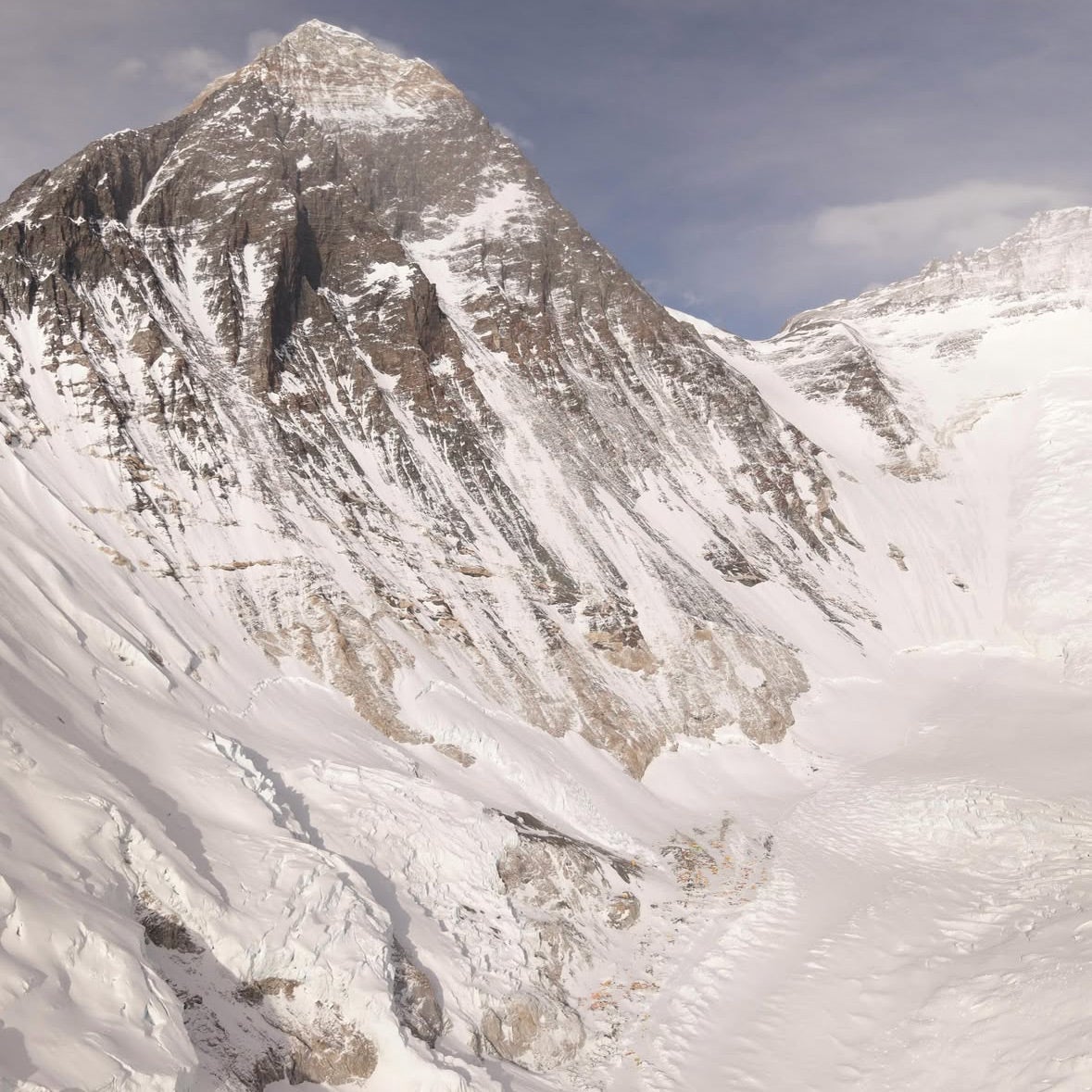
At 1 A.M. on May 12, 2026, Polish ski mountaineer Bartek Ziemski left Camp IV on Lhotse — alone. No Sherpa support. No fixed ropes to clip into. No supplemental oxygen. He carried his skis in his backpack, broke his own trail to the 8,516-metre summit, arrived just after noon Nepal time, strapped on the skis, and descended all the way to Base Camp by 4:30 P.M. He navigated the steep Lhotse Face, threaded through the Khumbu Icefall, and crossed crevasses on the ladders that climbers use on foot — except he was on skis. According to the Himalayan Database, which tracks Himalayan climbing records, Ziemski became the first person to ski Lhotse without supplemental oxygen. It was his eighth descent of an 8,000-metre peak. The whole thing was done quietly, without ceremony. "The conditions were okay," he told Outside. "I was worried about conditions deteriorating so I pushed and did it quite early."
Why 8,000 Metres Is a Different Sport Entirely
Think about what precise ski technique actually requires: your legs reading micro-variations in snow texture, your upper body counter-rotating in fractions of a second, your hands planting poles at exactly the right moment. Now imagine trying to execute all of that when your brain is running on roughly a third of the oxygen it normally gets at sea level. Above 8,000 metres — what climbers call the Death Zone — the atmosphere is so thin that the body cannot acclimatise further. It is simply degrading. Motor control, reaction time, and decision-making all deteriorate. A skier on a steep Himalayan face isn't just fighting fatigue; they're fighting a nervous system that is genuinely impaired. Ziemski did this without supplemental oxygen, meaning he accepted that full physiological cost with no buffer. The Lhotse Face is one of the largest and steepest glacial faces in the Himalayas. Navigating it on skis, in those conditions, is not a faster way down — it is an exponentially more demanding one.
Where This Sits in the History of High-Altitude Skiing
High-altitude ski descents have a lineage that stretches back decades, built by a small number of mountaineer-skiers willing to redefine what the sport could mean at extreme elevation. Ziemski's Lhotse descent is his eighth completion of an 8,000-metre peak on skis — a body of work that places him among the most accomplished practitioners of ski mountaineering at altitude alive today. The Himalayan Database's confirmation that no one had previously skied Lhotse without supplemental oxygen underlines how narrow this field is: these are not records being broken every season. They accumulate slowly, one dangerous first at a time. What makes this particular descent notable beyond the record itself is the self-supported nature of it — no Sherpa assistance, no fixed lines, no oxygen. Each of those removed variables is a removed safety margin. Ziemski's characteristically understated response to what comes next: he already holds an Everest permit for this season. "I got the permit also for Everest. And I'm a poor guy, so I can't say no and go home. So, yeah, I'm gonna try Everest now, too."
The Logistics of Getting Skis Down a Mountain Like This
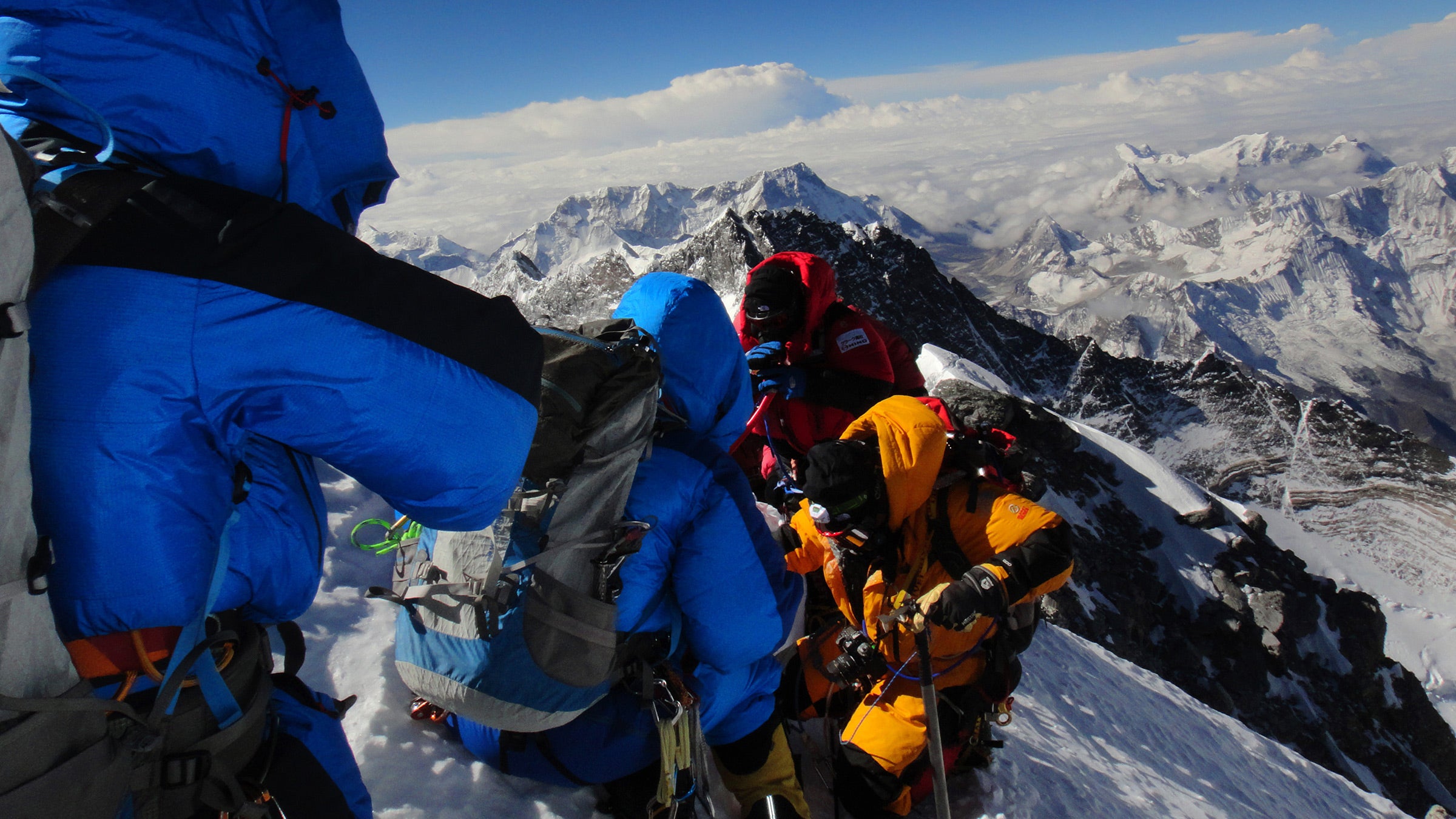
Ziemski carried his skis in his backpack on the ascent — meaning he climbed to 8,516 metres with that additional load before he ever clicked into a binding. On the descent, the Khumbu Icefall presented a problem that no ski resort has ever engineered a solution for: crevasses bridged by ladders, placed there for climbers moving on foot. He crossed them on skis. The 2026 Everest season has seen 492 permits issued — the most in history — and hundreds of climbers staged at Camps II and III waiting for summit weather windows. Ziemski moved through all of this, alone, starting at 1 A.M. to get ahead of deteriorating conditions. The physical and logistical picture that emerges is of someone who has compressed an enormous amount of mountain-specific problem-solving into a single 15-hour day at the edge of what human physiology can sustain.
Sources
- [1]Mount Everest Live Updates: Climbers Expect Crowding When the Summit Push Begins — Outside Online
Comments
No comments yet — be the first to weigh in.