Malaysia's CBU EV Policy Is About Building an Ecosystem — MITI's Argument, and Why It's Complicated
MITI says it's not protectionism — but Malaysian consumers are paying a real price for that distinction.

The RM300,000 Question Every EV Buyer Is Asking
You've been eyeing an EV priced somewhere between RM100,000 and RM200,000 — the sweet spot where electric cars finally start making financial sense for a middle-class Malaysian household. Then, from July 1, 2026, that window effectively closes. Not because those cars disappeared, but because a new policy makes importing them commercially unviable. Here's the mechanism: MITI's new rules require all CBU (fully imported) EVs to have a minimum CIF value — that's the cost of the car before it even clears Malaysian customs — of RM200,000, plus a minimum power output of 180 kW (245 PS). CIF is like the wholesale price before GST, import duty, dealer margin, and everything else gets stacked on top. Run the numbers as Paul Tan's did: a Chinese EV at the minimum RM200,000 CIF attracts 5% import duty, 10% excise duty, and 10% sales tax, pushing the distributor's cost to roughly RM250,000. Add a 10% distributor margin and 10% dealer margin, and the retail price lands at a minimum of RM300,000. For a European EV, where import duty is 30% instead of 5%, that floor rises to at least RM360,000. This is the concrete cost Malaysians are being asked to absorb. The question is: what are they getting in return?

MITI's Actual Argument — Stated Fairly
Before stress-testing the policy, it's worth understanding what MITI is actually claiming — because the ministry is pushing back hard against the 'pure protectionism' narrative. Deputy Minister Sim Tze Tzin's position, as reported by Paul Tan's, is that the CBU restrictions are designed to push foreign EV brands toward CKD (completely knocked down) local assembly — and crucially, to deepen their integration with Malaysian suppliers. The goal, as Sim put it: 'We want foreign manufacturers to collaborate with our local vendors in the ecosystem so that they can enhance their capabilities, move up the value chain and position Malaysia to become an exporter of automotive components and parts while also preparing for the future of autonomous driving.' The pathway Sim describes is straightforward: if a foreign brand wants to sell EVs priced between RM100,000 and RM200,000 in Malaysia, it can — by working with local contract manufacturers and assembling here. The CBU door doesn't slam shut; it redirects traffic through the CKD route. Underpinning this is a genuine industrial asset. Malaysia is the world's sixth largest semiconductor exporter, and Sim explicitly flagged this as central to the government's EV ambitions — particularly as EVs and autonomous vehicles become increasingly software- and chip-intensive. The automotive sector contributed an estimated RM80 billion to RM95 billion to GDP in 2025 and supported more than 750,000 jobs. MITI's framing is that protecting this base while upgrading it is a legitimate industrial strategy, not just a shield for Proton and Perodua.

The Policy Flip-Flop Problem: When the Rules Change Twice in Four Months
Here's where MITI's credibility takes a hit — not on the industrial logic, but on the execution. The July 2026 rules are actually the second revision in under four months. The previous ruling, announced in late December 2025, set a minimum selling price of RM250,000 and a minimum power output of 200 kW (272 PS). The newer rules switched the metric to CIF value (RM200,000) and lowered the power threshold to 180 kW (245 PS). On the surface this looks like a relaxation. In practice, as the Paul Tan's analysis shows, the CIF-based calculation produces a higher effective retail floor than the old selling-price rule did. This kind of policy volatility has real consequences. As Carz Automedia reported in January 2026, distributors were already in a defensive posture — not planning fresh CBU imports, just clearing existing stock. New EV model introductions slowed not because brands lacked products, but because committing to CBU imports without regulatory certainty is 'commercially reckless.' The safer pivot, the report noted, was toward hybrids and PHEVs where tax exposure is better understood. There's also a structural tension the government hasn't resolved publicly: Malaysia's own targets call for 20% xEV penetration by 2030, rising to 50% by 2040 and 80% by 2050. Restricting the most price-accessible EVs from the market during the critical early adoption window makes those targets harder to hit, not easier. The government has not yet explained how it reconciles these two positions.

The CKD Bet: Can Malaysia's Assembly Industry Actually Fill the Gap?
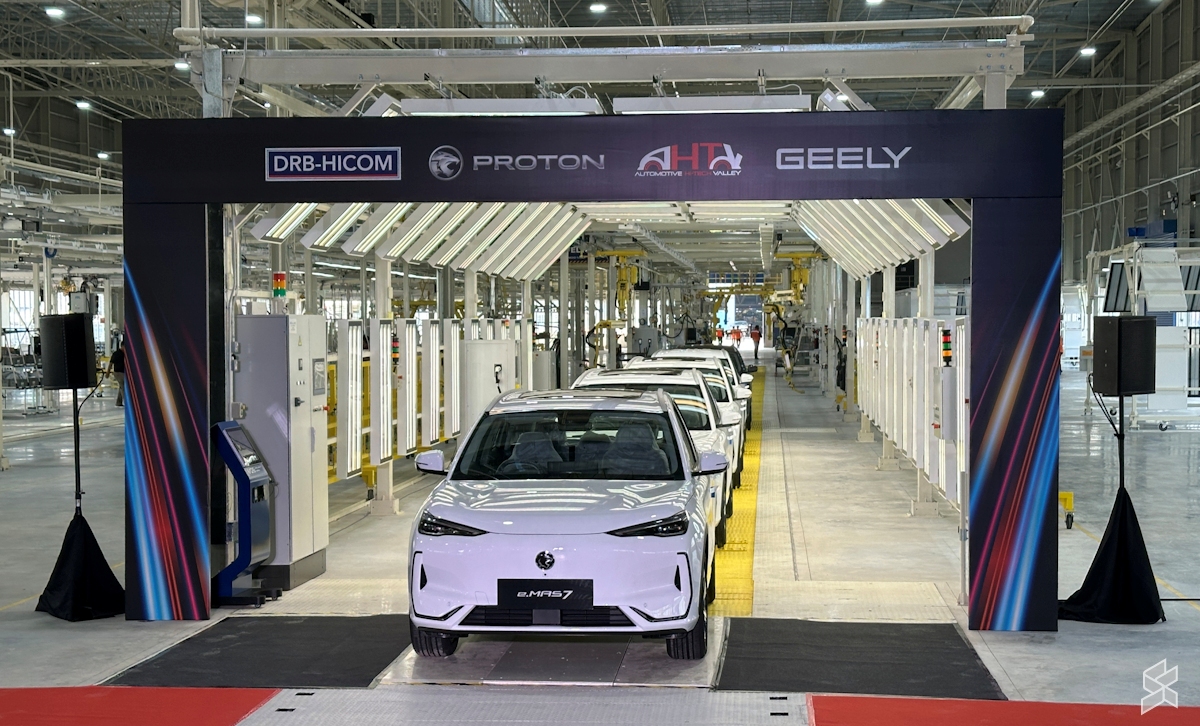
MITI's entire policy logic rests on a substitution assumption: CBU EVs exit the mid-market, CKD EVs fill the space. The question SoyaCincau posed directly — 'can Malaysia's CKD industry fill the gap?' — is the right one to ask. The honest answer from the sources is: not immediately, and not without real transition costs. As Carz Automedia noted, setting up assembly lines, validating suppliers, training labour, and aligning quality systems takes time measured in quarters. Outside of Proton's e.MAS 7, Perodua's QV-E, and Chery's locally assembled E5, most CKD EVs were expected to materialise only in late Q2 or early Q3 2026 at best. Even Proton's e.MAS 5 remained a CBU import from China. The BYD situation is instructive here. The AfMA report noted that BYD's investment proposal for an assembly plant in Tanjung Malim included 80% of output designated for export and 20% of vehicles priced at least RM200,000 for the domestic market — and that BYD may have been re-evaluating its plans, though MITI denied any link between the policy changes and BYD's investment decisions. William Ng, President of the Small and Medium Enterprises Association of Malaysia, identified the core risk clearly: 'Without strong localisation requirements, Malaysia would essentially become a supermarket for foreign EVs.' The concern isn't just about assembly — it's about whether CKD operations will genuinely deepen local supplier capabilities or simply shift the screwdriver-assembly criticism from CBU to CKD.
What to Watch Next
Three things will tell us whether MITI's ecosystem bet is paying off or just paying for incumbents. **Watch the CKD commitments.** The policy's credibility depends on foreign brands actually setting up local assembly with genuine supplier integration — not just token CKD operations to clear the price floor. Announcements from brands like BYD, NETA, and MG about Malaysian manufacturing commitments will be the real scorecard. **Watch the adoption numbers against the government's own targets.** Malaysia has committed to 20% xEV penetration by 2030. With mid-market CBU EVs effectively priced out from July 2026, and CKD supply still ramping up, the 2026-2027 adoption curve will show whether the transition gap is manageable or damaging. **Watch for a third policy revision.** The pattern of two significant rule changes in under four months suggests the policy is still being calibrated. If CKD supply doesn't materialise fast enough and adoption stalls visibly, expect further adjustments — possibly including a structured timeline for CBU restrictions rather than the current hard floor approach. The industrial strategy argument MITI is making is not implausible. Malaysia's semiconductor position is real, the automotive employment base is substantial, and building a supply chain that can export components globally is a legitimate ambition. But industrial strategy only works when the transition costs are managed honestly — and right now, Malaysian EV buyers are absorbing those costs without a clear timeline for when the ecosystem they're funding will actually deliver affordable electric cars back to them.

Sources
- [1]Malaysian CBU EV policy to help local automotive ecosystem, not just protect national brands – MITI — Paul Tan's Automotive News
- [2]MITI says EVs won’t become more expensive, but can Malaysia’s CKD industry fill the gap? — SoyaCincau
Comments
No comments yet — be the first to weigh in.