Your Brain Has a Braking System. Mindfulness Is How You Learn to Use It.
The neuroscience of why your reactions feel automatic — and whether meditation can actually rewire them.
It's 11:47pm. Your Boss Just Messaged.
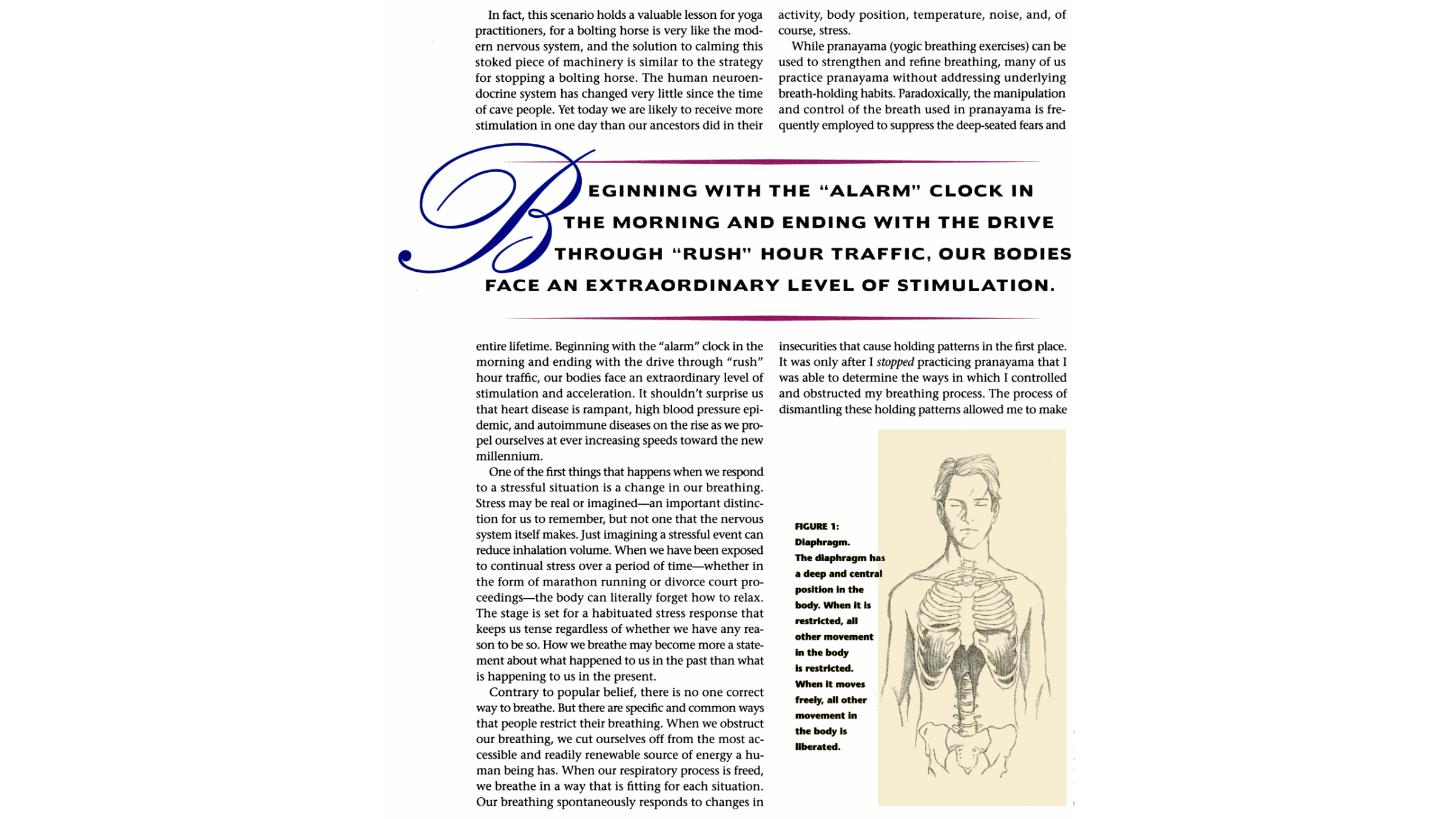
You've just put the phone face-down on the nightstand. The day was already long — the commute, the back-to-back meetings, the family group chat blowing up about the weekend. Then the notification light blinks. A work message. Not urgent, probably. But your chest tightens anyway. Your jaw sets. You're already composing a reply in your head, or rehearsing an argument, or just lying there with your eyes open and your mind running at full speed. This isn't weakness. It isn't poor time management. It's your brain doing exactly what it was built to do: detect a potential threat and fire a response before your conscious mind has even had a chance to weigh in. The problem is that the same system designed to help cave-dwellers escape predators is now misfiring at Slack notifications. As Yoga Journal's Donna Farhi puts it, our human neuroendocrine system 'has changed very little since the time of cave people. Yet today we are likely to receive more stimulation in one day than our ancestors did in their entire lifetime.' The gap between stimulus and response — that fraction of a second where a choice could theoretically live — gets squeezed out entirely. What fills it instead is habit.
The Script Your Brain Keeps Reading From
Mindfulness teacher Patricia Rockman describes the problem with uncomfortable precision: 'Sometimes our reactions in those moments tend to be reflexive rather than intentional. We feel our anger or annoyance rise, and we react almost as though we're reading a script.' That script is a product of repetition. When a stimulus — a rude driver, a delayed response, a disappointing outcome — reliably triggers the same emotional state, the brain encodes that pairing as a habit loop. The reaction stops feeling like a decision because, neurologically, it largely isn't one anymore. The reflexive firing happens fast, below the level of deliberate thought. What mindfulness-based practice proposes is not the elimination of that initial firing — that's not realistic, and the sources don't claim it is. The proposal is narrower and more honest: that you can train the gap between the trigger and your behavioural response. Rockman's guided meditation is specifically framed around this: 'Can we explore these habitual reactions in a way that gives us enough space to respond differently?' The word 'space' is doing real mechanical work here, not just poetic work.

Why Breath-Anchoring Is a Physiological Reset, Not a Metaphor
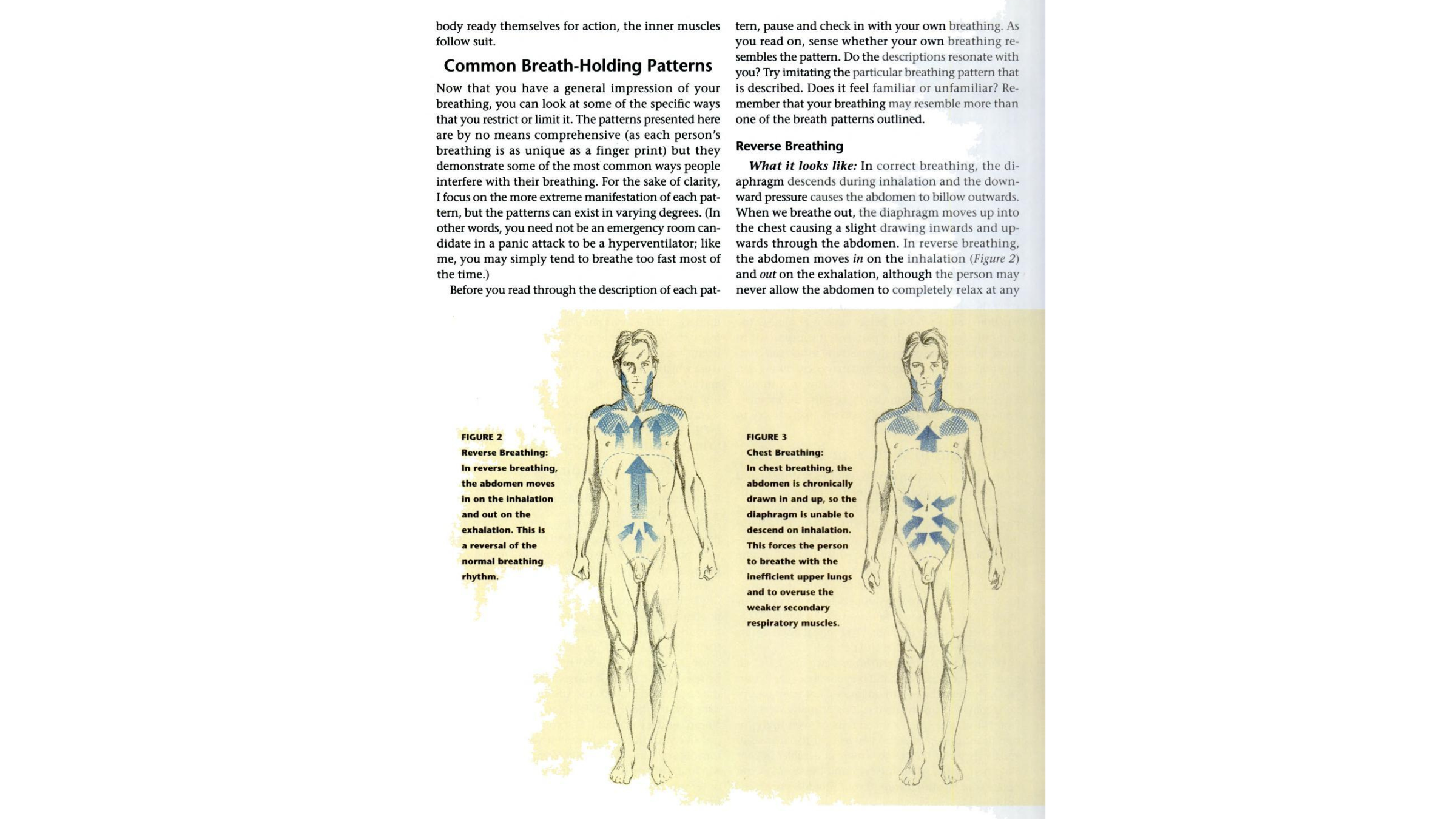
Both Rockman and Mark Bertin, across their respective guided practices, return to the same anchor: breath sensation. This is not arbitrary. Farhi's Yoga Journal piece explains the mechanism directly: 'One of the first things that happens when we respond to a stressful situation is a change in our breathing.' Critically, she adds that 'stress may be real or imagined — an important distinction for us to remember, but not one that the nervous system itself makes. Just imagining a stressful event can reduce inhalation volume.' This bidirectionality is the key. If stress alters breathing, deliberately altering breathing can interrupt the stress loop. Bertin's sleep practice uses exactly this logic: 'using that sense of physical movement that your body makes with each breath as a place to lightly anchor your awareness and attention.' Rockman's practice directs attention to 'the coolness of the air as it goes in, and the warmth as it moves out' — specific, granular sensory data that pulls cognitive resources away from the rumination loop and into present-moment physical experience. The breath is the lever because it's the one part of the autonomic system you can consciously operate. Farhi also warns that the relationship can go wrong: 'the body can literally forget how to relax' under prolonged stress, producing 'a habituated stress response that keeps us tense regardless of whether we have any reason to be so.' Breath-anchoring practices are, in part, a way of retraining that default.
What the Practice Actually Asks You to Do (vs. What Wellness Marketing Says)
The wellness industry tends to sell mindfulness as a feeling — calm, centred, floaty. The guided practices in these sources describe something more effortful and less glamorous: noticing when your mind has wandered, and returning. Repeatedly. Without judgment, but also without pretending the wandering didn't happen. Bertin is explicit that the goal is not forced relaxation: 'We can't force ourselves to relax any more than we can force ourselves to sleep.' Rockman frames the practice as building 'agency' — not serenity, not blankness, but the capacity to choose a response rather than execute a script. The body scan Bertin guides is described as serving two purposes simultaneously: 'to bring our mind back from its thinking and the places it wanders and also as an opportunity to relax our body physically.' It's a dual-function tool, not a passive experience. Farhi adds a useful corrective about pranayama specifically: 'the manipulation and control of the breath used in pranayama is frequently employed to suppress the deep-seated tears and insecurities that cause holding patterns in the first place.' Breath work done mechanically, without awareness, can become its own avoidance strategy. The sources consistently distinguish between using breath as a genuine attentional anchor versus using it as a way to override or suppress what's actually present.
The Honest Barrier: Why 'Just Meditate' Lands Badly
There's a real resistance many people feel when mindfulness is recommended — and it deserves to be named rather than smoothed over. When you're operating under genuine, sustained pressure, being told to 'sit with your breath' can feel dismissive. Farhi acknowledges this structural reality: the modern body is fielding 'an extraordinary level of stimulation and acceleration,' and the downstream effects — 'heart disease rampant, high blood pressure epidemic' — are not individual failures of relaxation technique. The practices in these sources don't pretend otherwise. Bertin's framing for sleep meditation acknowledges 'work or relationship stress, health concerns, hormonal changes, the state of the world' as legitimate reasons for sleeplessness — not as obstacles to be overcome by better attitude, but as real conditions that the practice works alongside, not against. Rockman similarly validates that habitual reactions arise from real irritations: 'anger at being stuck in traffic, sadness at not getting what you want, frustration when dealing with companies that keep you on hold.' The point isn't that these reactions are irrational. The point is that reacting from script, every time, without any gap, costs you options. The entry point the sources suggest is low: a comfortable posture, attention to one breath, a return when the mind wanders. Bertin's instruction to say internally 'I am aware I'm breathing in and aware I am breathing out' is about as minimal as an intervention gets. The argument these sources make is not that mindfulness is easy or that it solves structural stress. It's that the gap between stimulus and response is trainable — and that training starts with noticing the breath, once, and coming back.
Sources
- [1]A Meditation to Settle Mind and Body for Sleep — Mindful
- [2]A Meditation to (Gently) Interrupt Habitual Reactions — Mindful
Comments
No comments yet — be the first to weigh in.