Why Real-Time Voice AI Is So Much Harder Than It Looks
OpenAI's WebRTC headaches reveal the brutal infrastructure gap between demo and production.

What Is WebRTC and Why Does Everyone Use It (and Suffer With It)?
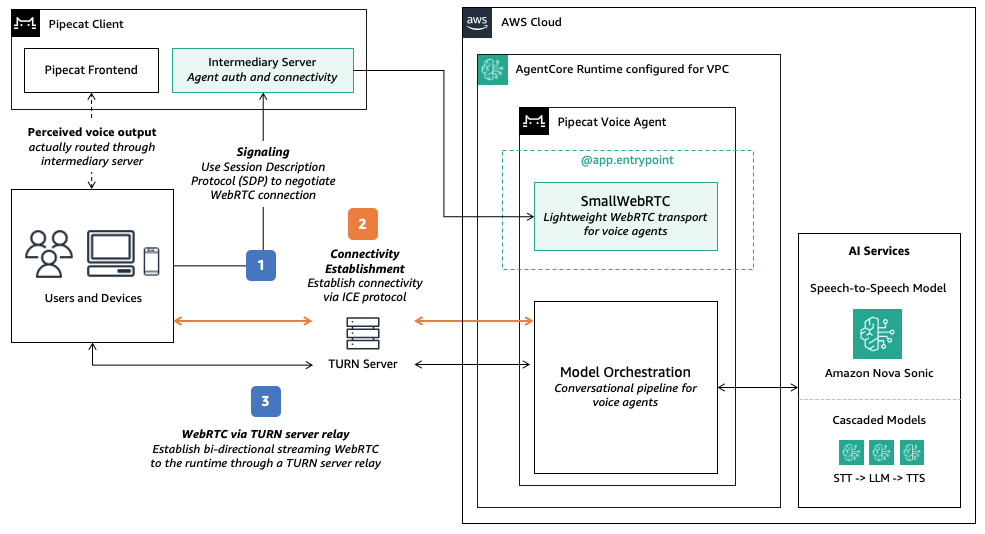
WebRTC — Web Real-Time Communication — is the internet protocol purpose-built for low-latency audio and video. It is why your browser-based video calls work without installing anything, and why real-time translation or voice AI can theoretically run inside a webpage. The alternative, WebSockets, works well for text chat — think of it like a persistent SMS thread between your app and a server — but it was never designed for continuous audio streams. With WebSockets, audio has to be chopped into chunks of 100–500 milliseconds each before being sent, which introduces exactly the kind of delay that makes voice AI feel robotic. WebRTC was built to avoid that chunking problem. The catch: WebRTC is genuinely complex to operate at scale. Cloudflare describes it bluntly — 'what starts as let's add video chat can quickly escalate into weeks of technical deep dives.' For AI companies whose core expertise is models, not media infrastructure, that complexity is a serious tax on engineering time.
The Specific Wall OpenAI Hit — and Why Every Voice AI Company Hits It Too
OpenAI's engineers discovered that a standard WebRTC practice called one-port-per-session media termination — where each active conversation gets its own dedicated network port — was fundamentally incompatible with their infrastructure at scale. With hundreds of millions of users, that approach simply does not hold. The fix required a complete architectural overhaul: a 'split relay plus transceiver architecture' that preserves normal WebRTC behaviour for the user's device while rerouting how audio packets travel inside OpenAI's own network. The goal was to maintain stable ownership of what engineers call stateful ICE and DTLS sessions — essentially, keeping each conversation's connection alive and consistent — while also ensuring the first network hop for any user anywhere in the world stays fast. This is not a problem unique to OpenAI. Any company building live voice AI at scale faces the same three constraints: infrastructure that cannot handle one-port-per-session, the need to maintain stateful connections that do not drop mid-sentence, and the physics of global routing latency.
The 800-Millisecond Budget That Leaves No Room for Error
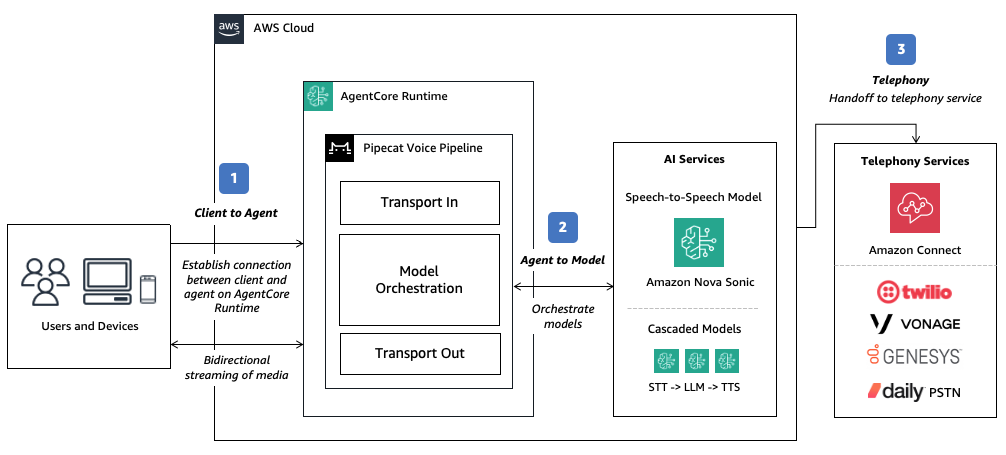
Cloudflare's engineering team has published the latency math that makes real-time voice AI so unforgiving. Natural conversation requires a full round-trip response in under 800 milliseconds. Break that down: 40ms for the microphone to capture audio, 300ms for speech-to-text transcription, 400ms for the language model to generate a response, 150ms for text-to-speech synthesis. That already adds up to 890ms before a single byte of network routing inefficiency enters the picture. Every millisecond of poor infrastructure choice — a server that is geographically too far from the user, a congested network hop, a poorly tuned audio pipeline — pushes the experience past the threshold where conversation feels natural. This is why infrastructure companies are attracting serious capital. LiveKit, whose technology powers ChatGPT's Advanced Voice Mode and whose customers include xAI, Tesla, Meta, Spotify, and 911 emergency operators, raised $100 million in a Series C round that valued the company at $1 billion. Index Ventures led the round, with participation from Salesforce Ventures, Hanabi Capital, Altimeter Capital, and Redpoint Ventures — bringing LiveKit's total raised to $183 million.

Sources
- [1]OpenAI’s 4 Steps To Low-Latency Voice AI At Global Scale — quantumzeitgeist.com
- [2]Cloudflare is the best place to build realtime voice agents — blog.cloudflare.com
- [3]LiveKit Reaches $1 Billion Valuation as Voice AI Infrastructure Heats Up — unite.ai
- [4]Bring multimodal real-time interaction to your AI applications with Cloudflare Calls — blog.cloudflare.com
- [5]OpenAI brings its o1 reasoning model to its API — for certain developers | TechCrunch — techcrunch.com
- [6]Deploy voice agents with Pipecat and Amazon Bedrock AgentCore Runtime – Part 1 | Amazon Web Services — aws.amazon.com
- [7]Cloudflare is the best place to build realtime voice agents — blog.cloudflare.com
- [8]2332531 — manilatimes.net
- [9]Part 1:Building Your First Video Pipeline: FFmpeg & MediaMTX Basics | HackerNoon — hackernoon.com
- [10]Make your apps truly interactive with Cloudflare Realtime and RealtimeKit — blog.cloudflare.com
Comments
No comments yet — be the first to weigh in.